

 English
 русский


Home / News / Industry News / Are Zero-Emission Electric Tow Tractors the Future of Industrial Logistics?
The Shift Toward Cleaner Operations
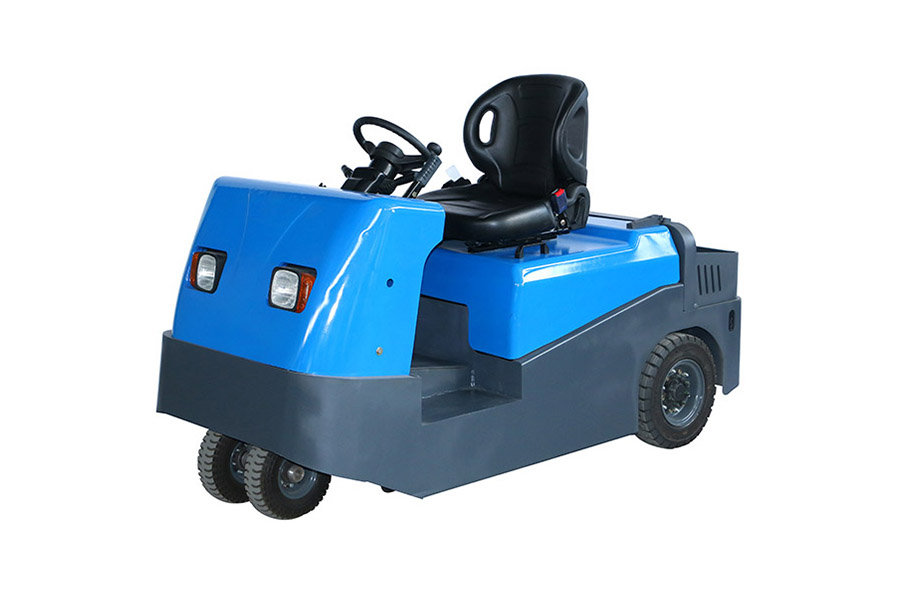
In recent years, industrial and logistics sectors have increasingly recognized the importance of environmental responsibility. Among the various innovations reshaping material handling, electric tow tractors stand out as a decisive step toward sustainable mobility. Their zero-emission performance not only reduces environmental impact but also redefines operational efficiency within warehouses, factories, airports, and distribution centers. Unlike traditional models dependent on internal combustion, these battery-powered tow tractors offer clean, silent, and reliable performance without sacrificing towing capacity.
Zero-Emission Advantage in Material Handling
The defining feature of electric tow tractors lies in their complete elimination of on-site exhaust gases. This characteristic directly supports the development of sustainable towing solutions, enabling businesses to align with stricter environmental standards. In indoor environments such as warehouses and production floors, the absence of harmful emissions improves air quality, protecting both equipment longevity and worker health.
Furthermore, the low noise tow tractor design enhances workplace comfort. Operators benefit from reduced acoustic fatigue, while facility managers observe quieter operations that integrate seamlessly into high-density logistics hubs.
Technical Perspective on Zero-Emission Design
The environmental advantage is supported by advanced battery systems and powertrain engineering. A battery-powered tow tractor relies on rechargeable lithium or lead-acid batteries, optimized to deliver both high torque and consistent pulling power. The closed energy loop allows repetitive operations without combustion-related downtime.
In practice, this design reduces maintenance needs. The absence of exhaust systems, filters, and engine fluids simplifies service schedules, making energy-efficient tow tractors more predictable in lifecycle cost calculations.
Application Expansion Beyond Warehouses
Initially adopted in enclosed facilities, the electric towing vehicle is now expanding its utility across diverse sectors. Airports, distribution centers, and manufacturing sites increasingly rely on this clean mobility. In environments where safety and compliance intersect, a zero-emission tow tractor ensures regulatory alignment without requiring costly air filtration systems.
The modularity of designs also allows high load capacity tow tractors to perform demanding tasks outdoors, extending the scope of sustainability into heavy-duty logistics.
Comparative Table of Electric Tow Tractor Features
| Feature | Description | Operational Value |
|---|---|---|
| Zero-Emission Performance | Fully eliminates on-site exhaust gases | Improves workplace air quality and meets environmental standards |
| Energy Efficiency | Optimized battery power with reduced energy loss | Cuts operational costs while supporting sustainability |
| Low Noise Design | Quiet electric drive with minimal vibration | Enhances operator comfort and reduces workplace fatigue |
| Long Battery Life | Advanced battery packs enabling extended duty cycles | Ensures reliability during continuous shifts |
| Quick Charging Capability | Rapid charging systems integrated into operations | Reduces downtime and increases productivity |
| High Load Capacity | Engineered for industrial-grade towing strength | Expands applications in warehouses, airports, and factories |
| Ergonomic Operation | Operator-focused control and comfort systems | Improves safety and long-term usability |
Ergonomic and Safety Integration
The push for zero emissions does not overshadow the human factor. Ergonomic tow tractors are designed with intuitive controls, adjustable handles, and safety-first layouts. This ensures operators maintain full control while reducing physical strain. Enhanced braking systems and intelligent speed regulation further safeguard both workers and materials.
In synergy with zero-emission performance, these ergonomic advantages make industrial electric tow tractors a cornerstone of future-ready logistics strategies.
Long-Term Economic Impact
From an investment perspective, the sustainability of electric towing equipment extends beyond environmental benefits. Reduced maintenance, stable energy costs, and regulatory compliance collectively form a compelling case for adoption. The combination of long battery life tow tractors with predictable service intervals helps organizations optimize budgets and avoid hidden costs commonly associated with fossil-fuel machinery.
The Road Ahead for Zero-Emission Mobility
As governments enforce stricter emission controls, and industries seek cleaner operations, electric tow tractors will continue to evolve. Future innovations are likely to focus on automated tow tractors integrated with smart navigation, enhancing efficiency while maintaining their zero-emission foundation.
The zero-emission feature, once considered an environmental bonus, has become a defining performance standard. The ability to combine sustainability, efficiency, and high load capacity positions electric tow tractors as not just a replacement for traditional models, but as a transformative force in industrial mobility.