

 English
 русский

Home / News / Industry News / How Do Battery Technology and Charging Impact the Performance of Electric Counterbalance Forklifts?
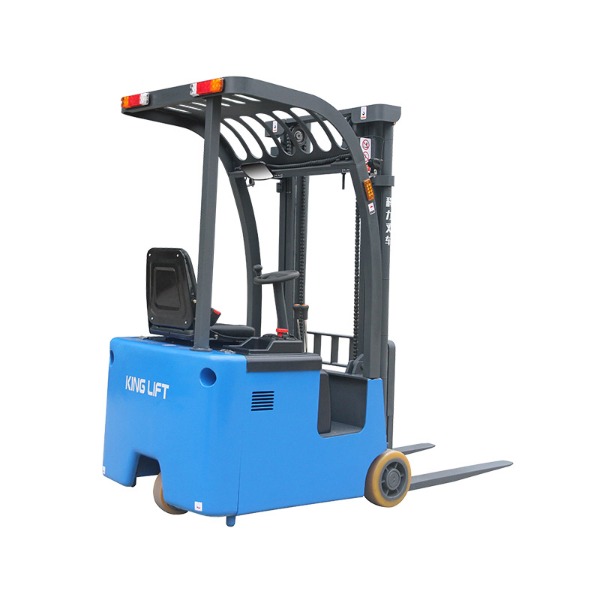
The material handling industry has witnessed a quiet but profound shift toward electrification. At the heart of this transformation stands the electric counterbalance forklift, a machine once seen as suitable only for light indoor work and now competing head‑to‑head with internal combustion models in heavy‑duty, multi‑shift operations. Yet the real deciding factor is no longer just the forklift’s motor or hydraulics — it is the battery and the charging ecosystem. Understanding how battery technology and charging strategies influence everything from daily uptime to long‑term costs is essential for any fleet manager.
The Battery as the Heart of Performance
Traditionally, an electric counterbalance forklift relied on lead‑acid batteries. These are heavy, require lengthy cooling and charging periods, and demand regular maintenance — watering, equalizing, and cleaning. Their impact on performance is straightforward: a lead‑acid battery typically delivers five to six hours of continuous operation, then needs eight hours of charging plus eight hours of cooling before it is ready again. That schedule forces a second battery and a battery‑changing station for multi‑shift operations, adding space, labor, and safety risks.
Modern lithium‑iron‑phosphate (LFP) or lithium‑nickel‑manganese‑cobalt (NMC) batteries change this equation entirely. An electric counterbalance forklift powered by lithium chemistry can opportunity charge during breaks and lunch, running continuously across three shifts with a single battery. The performance gains are not incremental — they are structural. Acceleration, lift speed, and gradeability remain consistent from full charge down to nearly empty, whereas lead‑acid batteries show a noticeable voltage drop as they discharge, reducing travel and lift speeds.
| Performance Factor | Lead‑Acid Battery | Lithium‑Ion Battery |
|---|---|---|
| Shift coverage with 1 battery | 1 shift (with 2nd battery needed for 2+ shifts) | 3 shifts (with opportunity charging) |
| Charging time (0‑100%) | 8 hours | 1‑2 hours |
| Cooling time required | 8 hours | None |
| Voltage drop during discharge | Significant | Flat curve until <10% SOC |
| Maintenance | Weekly watering, cleaning | None |
This table illustrates why battery choice directly dictates the operational profile of any electric counterbalance forklift. Without changing the chassis or the mast, a lithium‑powered unit can handle double the daily workload of a lead‑acid one.
Charging Strategies: More Than Plugging In
Even the battery will underperform if charging practices are mismatched. Three main charging methods exist for an electric counterbalance forklift: conventional, fast, and opportunity charging. Each affects battery lifespan, energy efficiency, and daily throughput differently.
Conventional charging (0.1C to 0.15C rate) remains common for lead‑acid batteries. The charger supplies a low current over many hours. This method is gentle on the battery but demands long downtime — unsuitable for continuous operations unless spare batteries are rotated. Conventional charging usually requires dedicated, well‑ventilated rooms because lead‑acid batteries emit hydrogen gas during the final stages.
Fast charging (0.5C to 1C rate) cuts charging time to one or two hours. For lithium‑ion batteries, this is standard and causes negligible degradation. For advanced lead‑acid batteries (e.g., thin plate pure lead), fast charging is possible but still generates heat, requiring cooling periods. Fast charging enables an electric counterbalance forklift to return to work within a meal break, effectively eliminating the second battery.
Opportunity charging means plugging in the forklift during any pause — operator breaks, shift handovers, or brief lulls in workflow. This is only practical with lithium‑ion chemistries that tolerate partial charging without memory effects or reduced cycle life. Opportunity charging transforms a single electric counterbalance forklift from a one‑shift machine into a round‑the‑clock workhorse. The key metric is not how fast the battery charges from 0% to 100%, but how many kilowatt‑hours can be added in five or ten minutes. Modern lithium packs can accept 30‑50 kW charge rates, adding enough energy for another hour of heavy lifting in under 15 minutes.
| Charging Strategy | Typical Battery Type | Downtime per Charge | Multi‑Shift Viable? | Battery Life Impact |
|---|---|---|---|---|
| Conventional | Lead‑acid | 8+8 hours | No (needs spare) | Moderate |
| Fast | Lithium‑ion / TPPL | 1‑2 hours | Yes (2 shifts) | Low (Li) / Moderate (TPPL) |
| Opportunity | Lithium‑ion | 0‑15 min (partial) | Yes (3 shifts) | Very low |
Thermal Management: The Hidden Constraint
Heat is the silent enemy of all batteries. An electric counterbalance forklift working in a foundry, cold store, or outdoor yard encounters temperature extremes that directly affect charge acceptance and available power. Lithium‑ion batteries typically incorporate battery management systems (BMS) that monitor each cell’s temperature and adjust charge/discharge rates accordingly. Below 0°C (32°F), charging must be limited to prevent lithium plating — a permanent damage mode. Above 45°C (113°F), both charge and discharge rates are reduced to avoid thermal runaway.
Lead‑acid batteries suffer differently. Cold temperatures increase electrolyte viscosity, reducing effective capacity by 30‑50% at -20°C. Heat accelerates water loss and grid corrosion, cutting cycle life by half for every 10°C above 25°C. Therefore, the operating environment heavily influences which battery technology makes sense for an electric counterbalance forklift. Fleets in unheated warehouses or outdoor applications often specify batteries with integrated heating pads or choose lithium chemistries designed for low‑temperature operation (e.g., LFP with self‑heating function).
Total Cost of Ownership and Uptime
Performance is not just about speed and lift height — it is about predictable availability. An electric counterbalance forklift that breaks down or sits waiting for a charge costs money every minute. Battery technology directly impacts two components of total cost of ownership (TCO): energy cost per hour and labor cost for battery handling.
Lead‑acid batteries have lower upfront purchase price but require:
- Spare batteries (one per shift)
- Battery changers (gantries, extractors, or rollers)
- Dedicated wash and charge rooms with acid‑resistant floors and eyewash stations
- Labor for watering, equalizing, and swapping (typically 15‑20 minutes per change)
- Disposal costs for hazardous metals and acid
Lithium‑ion batteries cost more initially but eliminate:
- Battery changing equipment and labor
- Separate charging infrastructure (can charge anywhere with a standard industrial outlet)
- Watering and cleaning
- Ventilation requirements (no gassing during standard operation)
When calculating TCO for an electric counterbalance forklift over a 10‑year life, the lithium‑ion solution often becomes cheaper after the second or third year, despite a higher purchase price. More importantly, uptime increases because opportunity charging eliminates the non‑productive battery swap routine. One logistics operator reported increasing effective utilization of each forklift from 55% (lead‑acid with battery changes) to 89% (lithium‑ion with opportunity charging) — a 62% productivity gain without adding a single machine.
| Cost Component | Lead‑Acid (2‑shift, 1 forklift) | Lithium‑Ion (2‑shift, 1 forklift) |
|---|---|---|
| Initial battery cost | Lower | Higher (+100‑150%) |
| Spare batteries | Yes (1 spare) | No |
| Battery changer equipment | ~$8‑15K | $0 |
| Daily labor (swap/water) | 30‑40 min | 0 |
| Energy efficiency | ~75‑80% | ~92‑95% |
| Battery life (full cycles) | 1,200‑1,500 | 3,000‑5,000 |
| 10‑year TCO | Baseline | 15‑25% lower |
(Note: figures are illustrative ranges, not precise data.)
Energy Density and Forklift Design
Better batteries also enable better forklift design. High energy density — watt‑hours per kilogram — means the manufacturer can fit more stored energy into the same physical envelope, or reduce the counterweight needed. This matters because an electric counterbalance forklift uses its own battery weight as part of the counterbalance system. With lead‑acid, heavy battery blocks (often 1,500‑2,500 kg) occupy of the counterweight space. With lithium‑ion, the battery can be smaller and lighter. Some electric counterbalance forklift designs now place lithium batteries vertically along the back of the chassis or split them into two packs on either side of the mast, improving visibility and lowering the center of gravity.
Higher energy density also means longer run times without enlarging the battery tray. A lithium pack of the same physical dimensions as a lead‑acid battery typically holds 1.5 to 2 times the usable energy, because lithium can be discharged deeper (80‑100% depth of discharge vs. 50‑60% for lead‑acid without severe life reduction). Consequently, an electric counterbalance forklift with lithium can work a full eight‑hour shift without any charge, even in high‑intensity applications like double‑stacking or ramp operation.
Charging Infrastructure Impact
Switching battery chemistry often requires rethinking the facility’s electrical infrastructure. Lead‑acid batteries are usually charged in a centralized room with multiple 220V/380V chargers operating simultaneously. This creates high peak power demand — potentially 100‑200 kW for a fleet of ten forklifts. Lithium‑ion opportunity charging spreads the load across the day; each forklift draws high power (30‑50 kW) but for only 10‑15 minutes per charge event. The average power demand may be similar, but the peak demand changes. Some facilities need to upgrade their transformer or install power management systems to avoid tripping breakers when several lithium‑ion forklifts start fast charging at the same shift break.
Additionally, lithium‑ion chargers are lighter, smaller, and can be mounted on the wall at each workstation where an electric counterbalance forklift pauses — unloading docks, palletizing stations, or transfer aisles. This decentralized approach reduces the need for long travel distances to a central charging room, further improving productive time.
Practical Recommendations
When specifying an electric counterbalance forklift, consider these battery‑ and charging‑related questions:
Shift pattern – Single shift? Lead‑acid may suffice. Two or three shifts? Lithium‑ion with opportunity charging eliminates spare batteries and changers.
Available break time – Are there guaranteed 15‑minute pauses every two hours? If yes, opportunity charging works. If no, you need a battery that lasts a full shift without charging.
Ambient temperature – Cold storage below freezing demands batteries with active heating or specific low‑temp chemistries.
Electrical capacity – Can your facility handle multiple fast chargers simultaneously? If not, consider a smaller fleet with staged charging or a power management system.
Total lifetime cost – Compute TCO over 10 years, not purchase price alone. Include labor, energy, spare batteries, and disposal.
Conclusion
The battery and charging system are no longer mere accessories for an electric counterbalance forklift — they define its true performance envelope. Lead‑acid remains adequate for low‑intensity, single‑shift operations. But for any application demanding high uptime, multi‑shift coverage, or reduced labor involvement, lithium‑ion paired with opportunity charging delivers a step‑change in productivity.