

 English
 русский

Home / News / Industry News / How Electric Walkie Pallet Jacks Improve Warehouse Material Handling: A Practical Buying Guide
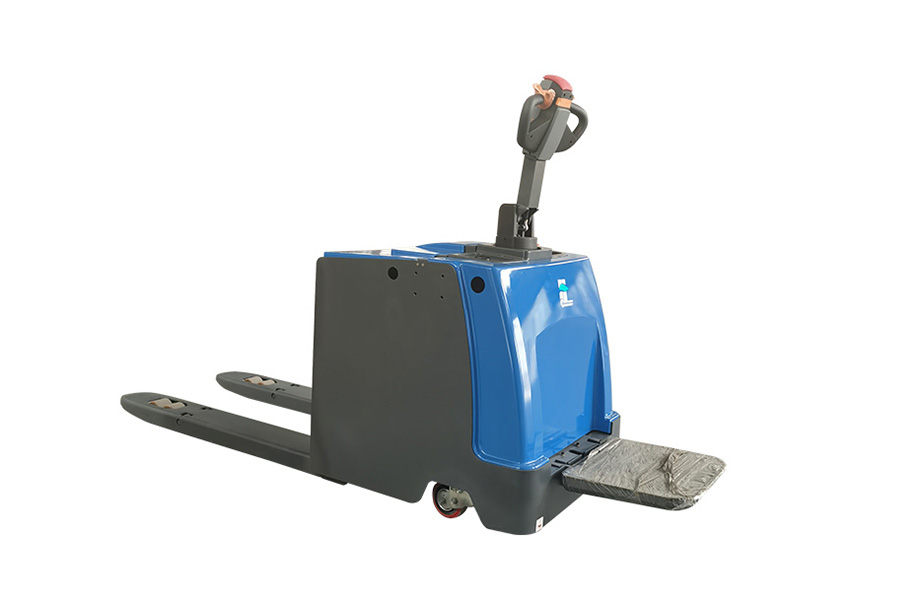
A single receiving dock can move hundreds of pallets before lunch. When that work depends on manual pulling and pushing, operators lose energy, floor time, and sometimes their wrists. Many warehouse managers now evaluate electric walkie pallet jacks as a practical middle ground between hand equipment and full ride-on trucks. The machine is compact, quiet, and simple to train on, which makes it well suited to sites that move goods short distances many times a day.
This guide explains how these machines work, how to match capacity and battery type to your operation, which safety functions deserve close attention, and how to compare suppliers in a way that protects your budget. The goal is not to favor one model but to help you ask better questions before you request a quotation.
Where Electric Walkie Pallet Jacks Fit in Material Handling
Every material handling method has a natural range. Hand tools are cheap and flexible but tiring over long distances. Ride-on trucks cover large floors quickly but require wider aisles, more training, and a larger investment. Electric walkie models occupy the space between these two options. The operator walks alongside the machine, guiding it with a control handle, while the motor handles the heavy work of traction and lifting.
For sites that handle between a few dozen and several hundred pallets per shift, this balance often produces the best return. The table below summarizes how the three approaches compare in typical warehouse conditions.
| Factor | Manual pallet jack | Electric walkie model | Ride-on truck |
|---|---|---|---|
| Typical travel distance | Short, under 30 meters | Medium, up to a few hundred meters | Long, across large floors |
| Operator effort | High | Low | Very low |
| Upfront cost | Lowest | Moderate | Highest |
| Aisle requirement | Narrow | Narrow to standard | Wider |
| Training time | Minutes | A few hours | Longer, formal training |
Why operators prefer walk-behind designs
Walk-behind designs keep the operator on foot, which improves visibility of the load and surrounding traffic. Because the operator never leaves the floor, the machine is easier to stop, redirect, and park in tight spaces. Many facilities find that this simplicity reduces both training demands and the number of unplanned incidents during the first months of use.
1.5 to 10 tTypical capacity range
2 typesLead-acid and lithium-ion batteries
5 checksCore safety items to verify
How the Drive, Lift, and Control Systems Work Together
Power and lifting
A rechargeable battery supplies a direct current drive motor that turns the traction wheel. A separate electric hydraulic pump raises the forks when the operator presses the lift control. Lowering is handled by a valve that releases fluid in a controlled way, so the load descends smoothly rather than dropping. Because the two systems draw from the same battery, battery health influences both travel speed and lifting performance.
The control handle as the main interface
The handle is where most of the machine's intelligence is expressed. A well-designed handle typically groups several functions that the operator can reach without releasing their grip.
- Throttle control that increases travel speed in proportion to the pressure applied.
- Direction switch for forward and reverse travel.
- Lift and lower buttons positioned for natural thumb reach.
- Horn for signaling at intersections and blind corners.
- Dead-man release that stops drive power when the handle is let go.
Good handle design reduces fatigue and mistakes. When controls are logical and within easy reach, operators keep their attention on the path ahead instead of hunting for buttons.
Ask suppliers to demonstrate the handle during a trial. Pay attention to how smoothly the speed responds at low throttle, since this matters most in tight loading areas.
Choosing the Right Load Capacity Without Overbuying
Capacity is the first specification most buyers check, and it is also the one most often misjudged. A machine rated higher than necessary costs more to buy, consumes more energy, and may be harder to maneuver. A machine rated too low wears out prematurely and creates safety risks. The right choice starts with the heaviest realistic load, not the average one.
Most electric walkie models fall into three broad capacity groups, as illustrated below.
Match capacity to the heaviest realistic load
Consider a food distributor that handles mixed pallets, some carrying liquids in heavy containers and others carrying light packaging. The average pallet might weigh 600 kilograms, but the heaviest loads approach 1,100 kilograms. In this case, a unit rated for the heavier figure is the safer and more durable choice, even though most daily work seems lighter. Buyers who size equipment on averages often find themselves replacing units within a few years.
Consider the load center and attachments
Rated capacity assumes a standard load center. Pallets with uneven contents, or loads that extend beyond the front of the pallet, shift the center of gravity forward and reduce effective capacity. Ask suppliers to confirm the rating at the load center you actually use, and whether longer forks or special attachments change the figure.
Battery Choices: Lead-Acid Versus Lithium-Ion
The battery shapes daily operations more than almost any other component. Lead-acid batteries have a long history, a lower purchase price, and a familiar maintenance routine. Lithium-ion batteries cost more initially but offer faster charging, a longer usable life, and less routine upkeep. The better choice depends on shift patterns, charging infrastructure, and the temperature of the working environment.
| Aspect | Lead-acid | Lithium-ion |
|---|---|---|
| Upfront cost | Lower | Higher |
| Charging time | Several hours | Much shorter |
| Opportunity charging | Limited | Practical during breaks |
| Routine maintenance | Watering and equalizing | Minimal |
| Cold environment performance | Reduced | Generally stronger |
| Battery weight | Heavier | Lighter |
A two-shift operation example
A regional warehouse running two shifts found that its lead-acid units needed battery swaps or extended overnight charging to cover the second shift. After switching to lithium-ion packs, the team used short breaks for top-up charging and removed the need for a dedicated battery room. The change was less about battery chemistry on paper and more about fitting the machine into the rhythm of the day.
When an electric pallet truck with lithium power makes sense
Operations with frequent stops, multiple operators, or limited charging space often benefit from lithium-ion designs. Sites that run one shift with long downtime each night may find lead-acid perfectly adequate. Before deciding, calculate your daily runtime and charging windows in plain terms, then compare them with the charge profile each supplier provides.
Pallet Compatibility, Fork Geometry, and Floor Conditions
Even the best machine performs poorly if it cannot enter the pallet cleanly or lift it evenly. Compatibility depends on a handful of measurements that should be checked before any order is placed.
- Fork length should match or exceed the pallet depth so the load sits fully supported.
- Fork width must fit the openings of the pallet, which vary between standard and block designs.
- Ground clearance determines whether the forks can pass over floor joints, dock plates, and debris.
- Pallet construction, whether wood, plastic, or steel, affects the grip and the risk of damage.
- Floor condition, including slope, smoothness, and drainage, influences tire selection and braking behavior.
Some operations use a mix of pallet types, such as wooden pallets for outbound shipments and plastic pallets for internal circulation. In that case, verify compatibility with each type rather than assuming one size fits all. A quick trial with real pallets from your own inventory is often more revealing than any specification sheet.
Tire material deserves attention too. Polyurethane drive wheels suit smooth concrete and indoor floors, while harder compounds may suit rougher surfaces. Mismatched tires create slipping on ramps and uneven wear that shortens service life.
Safety Functions Worth Verifying Before Purchase
Safety features should be verified, not simply assumed. The sequence below shows how a well-designed machine responds when the operator releases the control handle during travel.
Five features to check on a sample unit
- Deceleration delay that reduces speed gradually instead of stopping abruptly.
- Automatic braking whenever the handle returns to its neutral position.
- A stable five-point or similar base that resists tipping during turns.
- Anti-slip traction that holds on ramps and wet floors.
- Clear indicators for battery level and fault conditions.
Ask for documentation showing how each function is tested. A supplier with a mature quality system will usually be able to explain test procedures and show certificates without hesitation. Safety is also a training question. The best machine still needs operators who understand its limits, so build a short practical session into every rollout.
Application Scenarios: Cold Storage, Narrow Aisles, and Rough Ground
Cold storage and chilled distribution
Low temperatures affect batteries, hydraulic fluid, and operator comfort. In chilled environments, a walk-behind electric pallet jack designed for low temperature operation should include sealed components, appropriate fluids, and battery chemistry that tolerates the cold. Condensation at dock transitions is another concern, so check that electrical connections and control panels are protected against moisture.
Narrow aisle warehouses
Dense storage layouts reward compact machines with short turning radii. Measure your narrowest aisle and the turning space at the end of each row before choosing a model. A machine that fits a 2.5 meter aisle on paper may still struggle if the pallets on either side are not perfectly aligned, so leave a margin for real-world variation.
Outdoor and uneven ground
Yards, loading areas, and temporary sites present bumps, gravel, and drainage channels. Heavier-duty tires, reinforced frames, and higher ground clearance help in these conditions. Be realistic about limitations: a machine designed for smooth indoor floors should not be used as a substitute for a rough-terrain unit simply because it is cheaper.
Across all these scenarios, the pattern is the same. Define the environment first, then choose the features that serve it, rather than selecting a generic model and adapting your site to fit.
Maintenance and Total Cost of Ownership
Purchase price is only one part of the cost. Maintenance, battery replacement, downtime, and operator training all add up over the service life of the machine. A disciplined maintenance schedule keeps these costs predictable and protects resale value.
| Interval | Inspection items | Purpose |
|---|---|---|
| Daily | Handle function, brakes, horn, and visible damage | Confirm safe operation before the shift |
| Weekly | Wheels, forks, and charging connectors | Catch wear and loose parts early |
| Monthly | Hydraulic fluid level, battery terminals, and electrical contacts | Prevent lifting faults and power loss |
| Periodic | Full service by a qualified technician | Verify braking, steering, and load handling |
Operators can handle the daily checks, while a trained technician should manage monthly and periodic work. Keeping a simple log of inspections and repairs helps identify recurring problems, such as a particular fork set wearing faster than others or a charger that overheats.
Where the real savings appear
Facilities that track downtime often find that the greatest cost is not repair but lost productivity while a machine is out of service. Choosing reliable components, stocking common wear parts, and scheduling service during slow periods reduces that loss. Ask suppliers about parts availability and typical response times before you commit.
A Practical Supplier Evaluation Checklist
When comparing quotations, consistency matters more than headline price. Quotes that look similar may describe very different machines, so use the same criteria for every bid.
- Confirm rated capacity at a stated load center and the exact battery configuration.
- Request the technical data sheet, including dimensions, weight, and turning radius.
- Ask for certificates covering quality management, electrical safety, and battery transport testing.
- Check whether the supplier offers custom forks, special tires, or cold storage packages.
- Clarify warranty terms, spare parts supply, and technical support availability.
- Request a demonstration or trial in conditions similar to your own floor.
A reliable supplier will answer these questions in writing. Vague responses are often a sign that details will be sorted out later, sometimes at your expense.
Frequently Asked Questions
Q1: How long does a typical battery charge last in a shift?
Runtime depends on battery capacity, load weight, travel distance, and how often the lift function is used. A useful approach is to log actual usage for several days and compare it with the battery specification. Opportunity charging during breaks can extend coverage without a second battery.
Q2: Can electric walkie pallet jacks be used on ramps and slopes?
Many models handle moderate gradients, but the rated slope limit varies by design, load, and tire type. Always confirm the maximum incline with the supplier and avoid operating loaded machines on slopes beyond that limit.
Q3: What training do operators need before using these machines?
Operators should learn the handle controls, the braking behavior, load handling, and inspection routines. Most sites complete initial training within a few hours, followed by supervised practice in the actual work area before independent operation begins.
Q4: How do I know whether a machine suits cold storage?
Look for low temperature battery performance, sealed electrical components, suitable hydraulic fluid, and clear documentation of the minimum operating temperature. Request test results or field references from comparable facilities.
Q5: Is lithium-ion always the better choice?
Not always. Lithium-ion excels where charging windows are short and maintenance time is scarce. Lead-acid can be cost effective for single-shift sites with overnight charging. The right answer depends on your daily runtime and infrastructure.
Q6: What should I include in a request for quotation?
Include the heaviest typical load, pallet type, aisle width, floor surface, operating temperature range, shift pattern, and desired features. Detailed requirements allow suppliers to propose accurate models and produce comparable quotations.