

 English
 русский


Home / News / Industry News / How to Choose Electric Walkie Pallet Jacks: Capacity, Battery, and Safety Compared
Why Electric Walkie Pallet Jacks Are Replacing Manual Handling
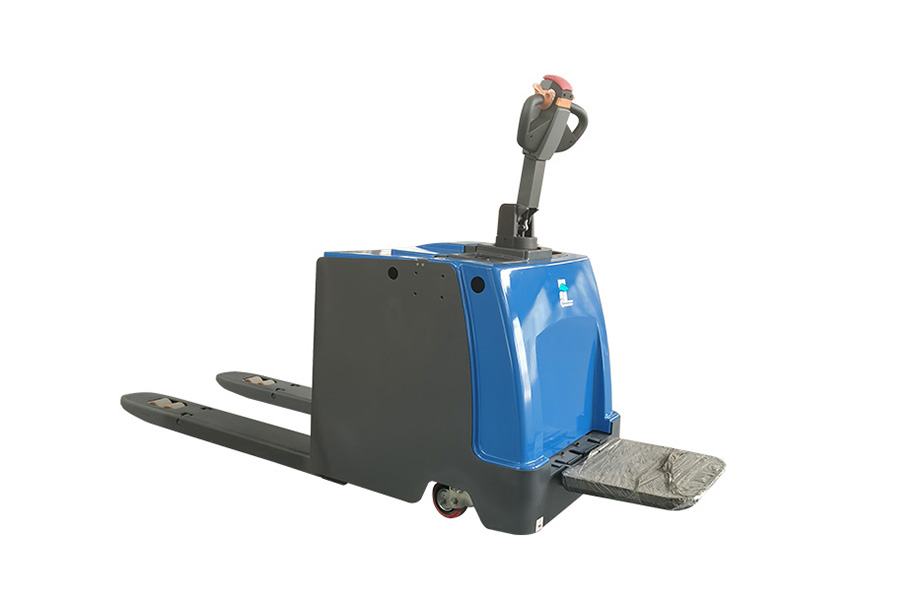
Every warehouse, retail backroom, and loading dock runs on the same daily rhythm: pallets arrive, get broken down, moved short distances, and staged for the next step. For decades that movement depended on manual pallet jacks, which work well for light loads but drain operators over a full shift. Electric walkie pallet jacks change that equation. They take the physical strain out of repetitive pulling and pushing, keep operators on their feet and in control, and let a single worker move loads that would otherwise need two people or a forklift.
This guide is written for buyers, operations managers, and safety coordinators who need to specify equipment rather than browse it. The goal is to help you match the machine to the work: how much it must lift, how long it must run between charges, what kind of floor and ramps it will cross, and which safety features protect your people during a real shift. Getting these decisions right at the start avoids the two most expensive mistakes in this category, buying too little capacity and paying for battery technology your operation does not need.
The core principle: an electric walkie pallet truck should be selected from your actual duty cycle, not from the brochure maximum. Load weight, travel distance, number of shifts, and floor conditions drive the right specification far more than any single headline number.
Understanding Load Capacity and Load Center
Load capacity is the most visible specification, and the most frequently misread. A machine rated at 2.0 tons is tested under ideal conditions, with the load centered on the forks at the standard load center distance. In daily use, the effective capacity can fall when pallets are unevenly loaded, when cargo sits forward of the standard load center, or when non-standard pallets change the weight distribution. Confirm your real working load, not only the nominal weight of the product.
Matching Capacity to Application
Most operations fall into one of three capacity bands. The table below summarizes typical duty profiles, though your own measurements should always take priority.
| Capacity Band | Typical Applications | Common Load Types |
|---|---|---|
| 1.5 tons | Retail replenishment, e-commerce picking, light packaging | Cartons, bagged goods, small consumer products |
| 2.0 tons | Manufacturing line feeding, standard warehouse transfer | Mixed palletized components, finished goods |
| 2.5 tons | Heavy liquids, export container loading, dense materials | Beverage cases, drums, dense packaged materials |
A useful rule is to select a capacity at least 20 percent above your heaviest regular load. This margin absorbs load center variation and keeps the drive motor and hydraulics from running at their limit every shift, which extends component life.
Lithium-Ion Versus Lead-Acid Batteries
Battery selection shapes daily productivity more than almost any other choice. Lithium-ion and lead-acid systems both power reliable electric walkie pallet trucks, but they fit different operating rhythms. The decision comes down to how many hours the truck runs, how often it can be charged, and what your charging infrastructure looks like.
Lithium-Ion
- Full recharge in roughly one to two hours
- Opportunity charging during breaks without damage
- No watering or equalization routine
- Higher upfront cost, often lower total cost over multiple shifts
Lead-Acid
- Full recharge typically six to eight hours
- Lower initial purchase price
- Requires periodic water checks and equalization
- Best suited to single-shift operations with overnight charging
A practical benchmark: if your operation runs more than one shift, or your trucks need short top-ups between tasks, lithium-ion typically delivers the better return. For a single-shift site with a dedicated overnight charging bay, lead-acid remains a sound and economical choice. Battery voltage, usually 24V or 48V, should be matched to the drive system and the expected duty cycle rather than chosen on price alone.
Charging Infrastructure Considerations
Plan your charging area before ordering. Lead-acid batteries release gas during charging and need ventilated space, while lithium systems are more compact and tolerate flexible charging schedules. Facilities that switch to opportunity charging often find they can run a smaller number of trucks more intensively, which reduces the total fleet size needed.
Reading Specifications with Confidence
Specification sheets for electric walkie pallet jacks can look similar at a glance, yet small differences in fork length, lift height, and aisle requirements determine whether a machine fits your layout. The table below shows how to compare the dimensions that matter most in day-to-day operation.
| Parameter | What It Affects | Buyer Check |
|---|---|---|
| Rated capacity | Maximum safe load | Compare to heaviest regular pallet plus margin |
| Lift height | Ability to clear dock plates and stacked goods | Verify against highest lift point in your process |
| Fork length | Pallet compatibility and two-pallet handling | Match to standard and non-standard pallet sizes |
| Turning radius | Maneuvering in narrow aisles | Test against your tightest aisle or container interior |
| Travel speed | Cycle time and productivity | Consider both loaded and unloaded speed |
Ask suppliers for the full dimensional drawing rather than summary figures. Check the overall length with forks retracted, since that dimension determines whether the truck can enter a container or tight staging area. A machine that is correct on paper but cannot turn in your real aisle is a costly error.
Safety Features That Matter on the Floor
Safety engineering on electric walkie pallet trucks targets three risks: uncontrolled movement, loss of stability, and operator injury during turns or ramps. Understanding how each feature behaves in practice helps safety coordinators write better operating procedures and training plans.
- Delayed acceleration: A short ramp-up period, commonly in the range of a few seconds, prevents sudden lurching when a loaded truck starts moving. This is especially valuable near dock edges and in congested pedestrian zones.
- Dead-man or handle-release braking: When the operator releases the control handle, the truck brakes automatically. This prevents rollaway on slopes and keeps the machine stationary while the operator steps away.
- Multi-point chassis stability: A stable base across wet or uneven surfaces reduces the risk of tipping during turns and ramp transitions.
- Regenerative braking: On descents, energy is recovered back to the battery while the truck is held at a controlled speed, which also reduces brake wear.
Feature names vary between manufacturers, so request a written description of how each safety function behaves under load, on a slope, and during a stop. Verify these behaviors during a supervised trial rather than accepting specifications alone.
Ramps, Floors, and Operating Conditions
Many electric walkie pallet truck failures and near misses trace back to the operating environment rather than the machine itself. Before selecting a model, survey the routes it will cover in detail. Note the gradient of any ramp, the condition of transition plates, floor finish, drainage, and the presence of debris or moisture.
Environmental Checklist
- Maximum ramp gradient and length that trucks must climb loaded
- Floor surface type, including smooth concrete, epoxy, or textured finishes
- Wet or cold storage conditions that affect traction and battery performance
- Dock plate gaps, thresholds, and lip heights at loading points
- Aisle width at the tightest turn and any overhead or floor obstructions
Cold storage deserves particular attention. Battery capacity can drop noticeably at low temperatures, so lithium systems are often preferred for freezer and chiller environments, and operating time should be verified under the actual temperature range rather than room conditions.
Customization Options for Specific Workflows
Standard models cover the majority of warehouse tasks, yet some workflows call for adjustments. Customization is most valuable when a site has consistent non-standard pallets, unusual container interiors, or a need for uniform fleet appearance across several locations.
Fork Length
Shorter forks suit container interiors and compact staging, while longer forks support double-pallet handling or oversized loads.
Battery Chemistry and Voltage
Selecting chemistry and voltage to match shift length, charging access, and temperature exposure.
Fleet Branding
Color and labeling adjustments help multi-site operations standardize equipment identification and operator training.
When discussing customization, provide the supplier with a short written brief covering pallet dimensions, load weights, aisle width, and charging setup. A clear brief shortens engineering review and reduces the chance of specifying a feature the site does not need.
A Step-by-Step Selection Process
A structured selection method prevents most specification errors. The sequence below works for single-site purchases and multi-unit fleet orders alike.
- Map every load your trucks will handle, including weights, pallet sizes, and load center behavior.
- Set the rated capacity with a margin above the heaviest regular load.
- Choose the battery type based on shift pattern and charging access.
- Verify physical fit: lift height, fork length, overall length, and turning in real aisles.
- Run a supervised trial on your actual ramps and floors before committing to a fleet order.
Operator Training and Maintenance Planning
Even the best-specified truck performs poorly without trained operators and a maintenance routine. Training should cover start-up checks, speed control on ramps, safe handle positioning, and the behavior of the braking and acceleration systems. Short refresher sessions every quarter catch habits that drift over time.
Routine Maintenance Priorities
- Daily visual check of forks, wheels, and handle controls
- Weekly inspection of battery connections and charging equipment
- Monthly check of brake response and steering alignment
- Scheduled hydraulic fluid and wheel wear review based on hours of use
Track hours of operation and fault logs from the start. Trends in wheel wear or battery discharge rate often reveal a developing problem weeks before it causes downtime.
Frequently Asked Questions
Q1: What is the main difference between an electric walkie pallet truck and a manual pallet jack?
A manual pallet jack relies entirely on operator effort to lift and move loads, which limits practical distance and load size over a full shift. An electric walkie pallet truck uses a battery-powered drive and hydraulic lift, reducing physical strain and allowing more consistent throughput across repetitive tasks.
Q2: Can electric walkie pallet trucks handle ramps safely?
Many models are designed for ramp use, but suitability depends on gradient, length, and surface condition. Verify the maximum loaded gradient with the supplier and confirm the braking and speed-control behavior during a supervised test on your actual ramp.
Q3: How long does a battery last on a single charge?
Runtime depends on battery chemistry, capacity, load weight, duty cycle, and temperature. Lithium systems typically support multiple shifts with opportunity charging, while lead-acid systems are generally sized for one shift per full charge. Request runtime data under conditions that match your operation.
Q4: What affects the effective load capacity of a pallet truck?
Load center distance is the primary factor. Cargo that sits forward of the standard center, or pallets with uneven weight distribution, reduce the safe working load. Always confirm your actual pallet configuration against the rated figures.
Q5: Is lithium or lead-acid better for cold storage?
Lithium systems generally maintain usable capacity better in low temperatures than lead-acid systems. For freezer and chiller work, verify operating time at the actual temperature range before deciding.
Q6: How should a buyer compare quotes for electric walkie pallet trucks?
Compare quotes on identical specifications: rated capacity, battery type and voltage, lift height, fork dimensions, safety features, and included charger. Ask each supplier to state warranty terms, spare parts availability, and expected service response times, since these affect total ownership cost as much as the purchase price.
Making the Right Decision for Your Operation
Selecting electric walkie pallet trucks is less about finding the strongest machine and more about finding the right fit for your loads, layout, and shift pattern. Start with a clear map of your work, specify capacity with a safety margin, choose a battery system that matches your charging reality, and verify performance on your own ramps and floors. Buyers who follow this sequence typically avoid oversizing, underperformance, and costly mid-life replacements.
When you are ready to move from research to specification, a short written brief covering your loads, aisle dimensions, and charging setup gives any qualified supplier what they need to recommend a configuration. You can review available models and their full specifications at electric walkie pallet jacks.