

 English
 русский


Home / News / Industry News / What Are the Safety Features to Look for in Warehouse Electric Pallet Trucks?
In the fast-paced environment of modern logistics, material handling equipment serves as the backbone of daily operations. Among the ubiquitous tools in these settings are warehouse electric pallet trucks. While these machines significantly increase efficiency and reduce the physical strain on operators compared to manual alternatives, their power and velocity introduce distinct operational risks. Ensuring workplace safety requires a comprehensive understanding of the built-in protective mechanisms available on modern equipment. When evaluating options from various electric walkie pallet jacks manufacturers, decision-makers must prioritize specific safety features that protect personnel, safeguard inventory, and prevent structural damage.
Ergonomic Handle and Controls
The control handle, often referred to as the tiller, is the primary interface between the operator and the machine. A well-designed handle is fundamental to safe operation, as it dictates how responsively the machine can be steered and stopped.
Emergency Reverse Button
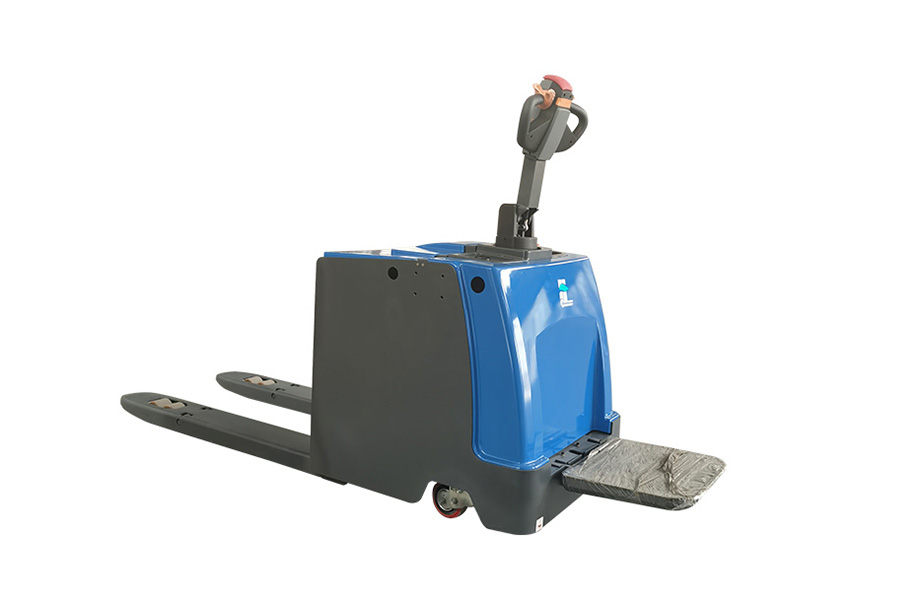
Positioned at the very top of the handle head, the emergency reverse button—commonly known as the belly button switch—is a critical safety mechanism. If an operator is backing up and becomes trapped between the truck and a wall, racking, or another obstacle, the button engages upon contact with the operator’s body. Once pressed, it instantly reverses the travel direction of the truck, moving it away from the operator to prevent crushing injuries.
Dual Butterfly Switches
Proportional travel controls, usually designed as dual butterfly switches, allow for precise speed regulation using either hand. This design ensures that operators can maintain a secure grip on the handle with both hands while smoothly adjusting acceleration, reducing the likelihood of sudden jerks that could destabilize the load.
Advanced Braking Systems
Reliable braking is paramount when maneuvering loads that can weigh thousands of pounds. High-quality warehouse electric pallet trucks utilize multi-tiered braking systems to handle different operational scenarios.
| Braking System Type | Primary Safety Function |
|---|---|
| Electromagnetic | Automatically engages when the handle is vertical or fully lowered, acting as a parking brake. |
| Regenerative | Slows the truck down when the throttle is released, feeding energy back into the battery. |
| Anti-Rollback | Prevents the truck from slipping backward when starting or stopping on ramps and inclines. |
The integration of these three systems ensures that the truck remains under control at all times, particularly when navigating inclines or when the operator unexpectedly releases the controls.
Speed Management and Cornering Control
Speed control is not just about stopping; it is also about maintaining stability during transit. High speeds coupled with sharp turns are a common cause of overturned loads and tipped trucks.
Automatic Speed Reduction
Advanced electric walkie pallet jacks manufacturers often integrate smart sensors that detect the steering angle. When the handle is turned past a specific threshold, the system automatically reduces the travel speed. This prevents the centrifugal force from destabilizing the pallet truck or causing the load to shift laterally.
Turtle Speed Mode
For operation in tight spaces, such as narrow aisles or inside trailers, a “turtle speed” or crawl function is indispensable. This feature restricts the velocity of the truck, allowing the operator to maneuver with precision without the risk of accidental high-speed collisions. Many modern trucks allow this mode to be operated with the handle in a fully upright position, improving maneuverability in confined spaces.
Visibility and Audible Warning Devices
A safe warehouse relies on clear communication between equipment operators and pedestrians. Because electric motors operate quietly, visual and auditory warning systems are vital.
- Horn and Acoustic Signals: A standard, easily accessible horn button on the handle allows operators to alert pedestrians when approaching blind corners, doorways, or intersecting aisles.
- Strobe Lights and Blue Spotlights: LED strobe lights mounted on the chassis provide a continuous visual cue to surrounding workers. Increasingly, industrial facilities favor blue floor-projection spotlights that cast a bright blue light on the ground several feet ahead of or behind the moving truck, giving pedestrians advance warning of an approaching vehicle.
Structural and Physical Guarding
Beyond electronic sensors and software controls, the physical construction of warehouse electric pallet trucks plays a massive role in injury prevention.
Low-Profile Chassis and Foot Guards
The chassis of the truck should feature a low-profile design that sits close to the floor. This structural choice acts as a physical barrier, significantly reducing the risk of the truck running over the operator’s feet or trapping an ankle underneath the frame.
Load Backrests
A sturdy, steel load backrest attached to the fork carriage prevents pallets from shifting backward toward the operator, particularly during sudden stops or when lifting loads to height. This is an essential feature when handling unstable, unbanded, or high-stacked cargo.
Battery Safety and Management
The transition to electric power introduces specific risks related to battery maintenance and charging. Whether utilizing traditional lead-acid batteries or modern lithium-ion systems, the power source requires dedicated safety features.
Battery Management Systems (BMS)
For units utilizing lithium-ion technology, an integrated BMS is crucial. The BMS monitors thermal levels, voltage, and current, preventing dangerous conditions such as overheating, overcharging, or deep discharging.
Secure Locking Mechanisms
Batteries are immensely heavy components. Safety-focused designs include robust mechanical locks that keep the battery firmly secured within its compartment during operation, preventing accidental shifts that could alter the truck’s center of gravity or cause electrical short circuits.
Conclusion
Selecting the right warehouse electric pallet trucks involves looking far beyond capacity and battery life. A thorough evaluation of safety features—ranging from ergonomic handle designs and intelligent braking systems to automatic speed reduction and robust physical guarding—is essential for maintaining a secure operational environment. By choosing equipment engineered with these advanced protective mechanisms, facility managers can significantly mitigate risk, protect their workforce, and ensure smooth, uninterrupted material handling operations.