

 English
 русский


Home / News / Industry News / What Buyers Should Know Before Choosing an Electric Pallet Stacker for Single-Faced Pallets
Why Single-Faced Pallets Shape Every Buying Decision
Warehouses that move palletized goods every day rarely struggle with the idea of lifting. They struggle with fit. A machine that looks right on paper can still slow a shift if its forks, lift height, or turning space do not match the pallets and racking on site. This guide walks through the choices that matter most when evaluating an electric pallet stacker for single-faced pallets.
A practical rule: confirm the pallet type and dimensions before comparing lift heights or prices. Most sizing mistakes begin with an assumption about the pallet rather than a measurement.
Single-faced pallets have a load deck on one side only. Their open underside changes how forks must enter, how the load sits on the forks, and how much support the pallet gives during lifting. A stacker designed for double-faced pallets may not engage them safely, while a unit built for a different pallet style may waste capacity or leave the load unstable. Matching the machine to the pallet is therefore the first technical step, not a detail to settle later.
What Changes When the Pallet Type Is Fixed
Once the pallet type is fixed, the rest of the specification becomes easier to define. Fork length, fork spacing, and load center can be set from measured dimensions. Lift height can be taken from racking drawings rather than estimates, and battery size can be matched to actual shift duration. Buyers who begin with a verified pallet description usually receive more consistent quotations and fewer revisions later in the process.
How an Electric Pallet Stacker Fits Into a Daily Workflow
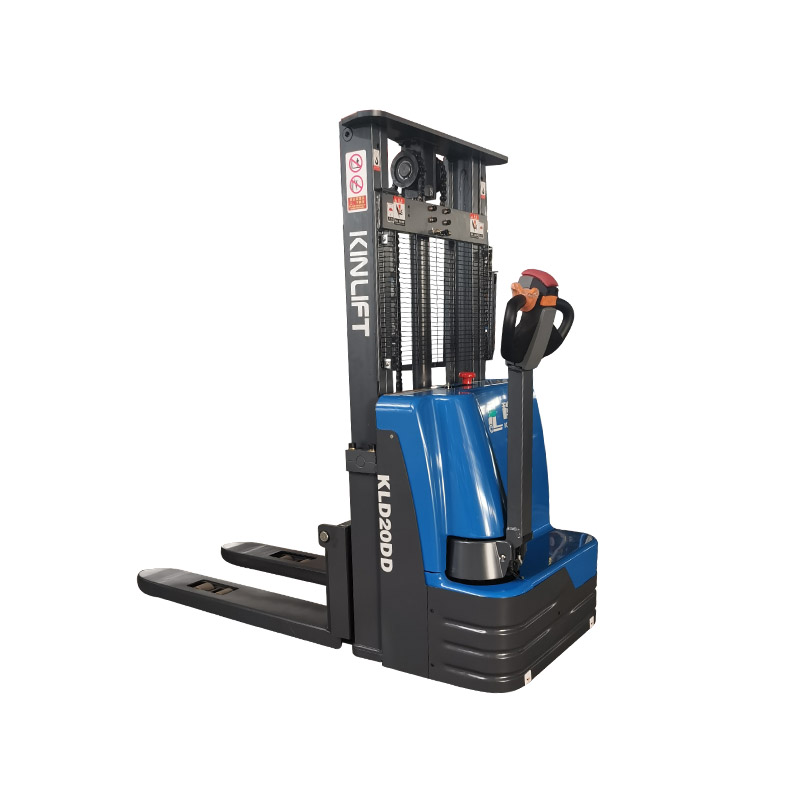
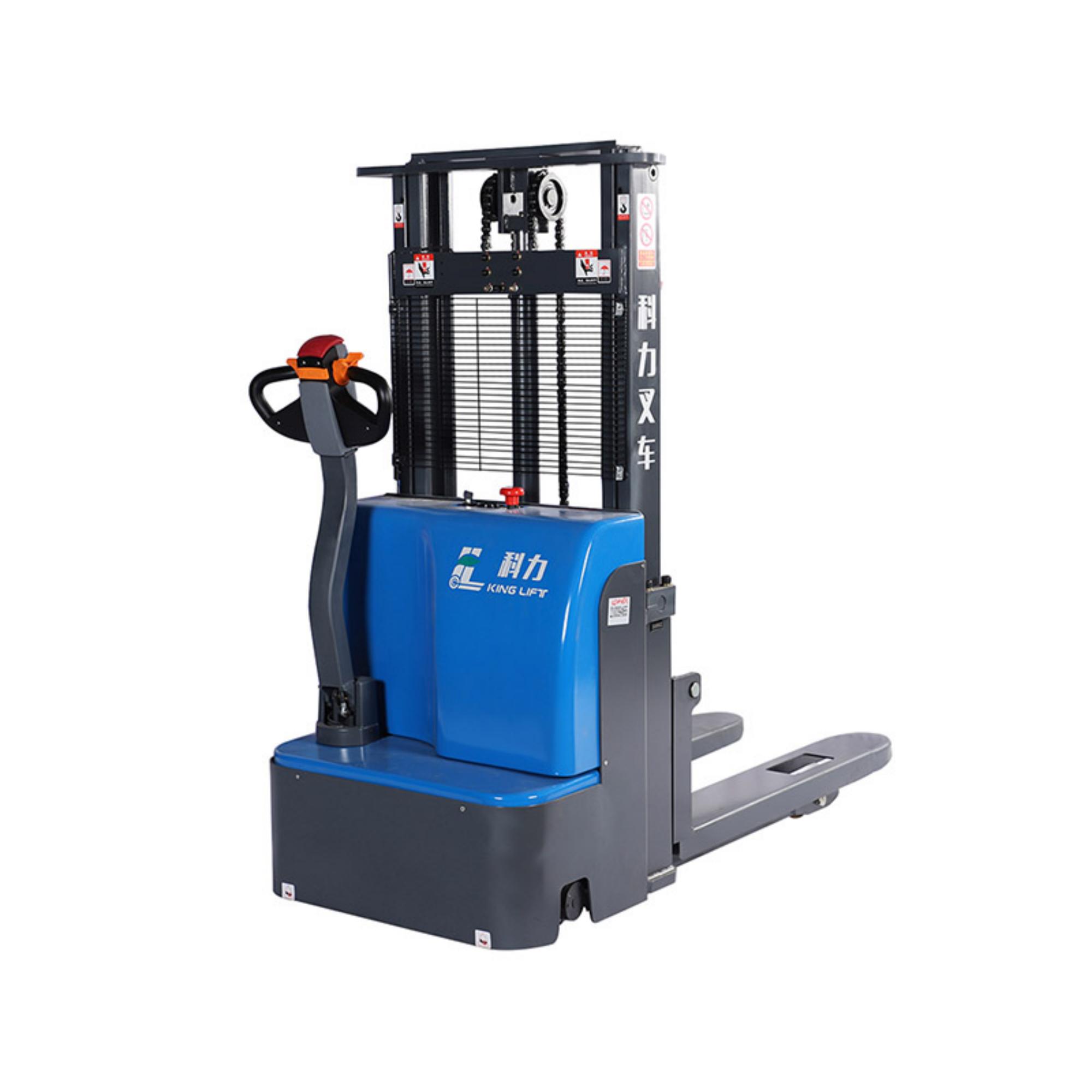
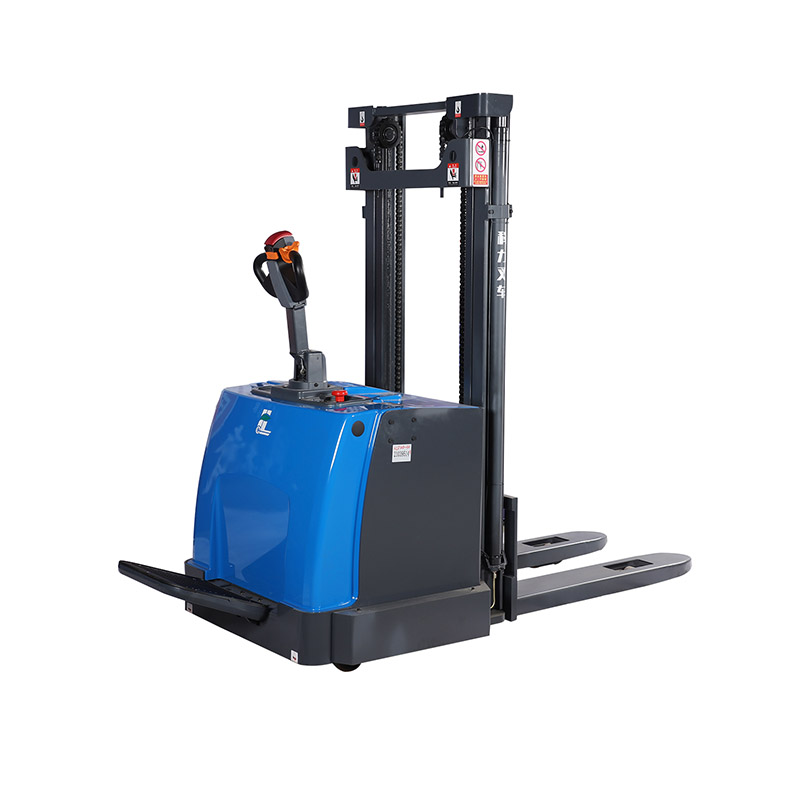
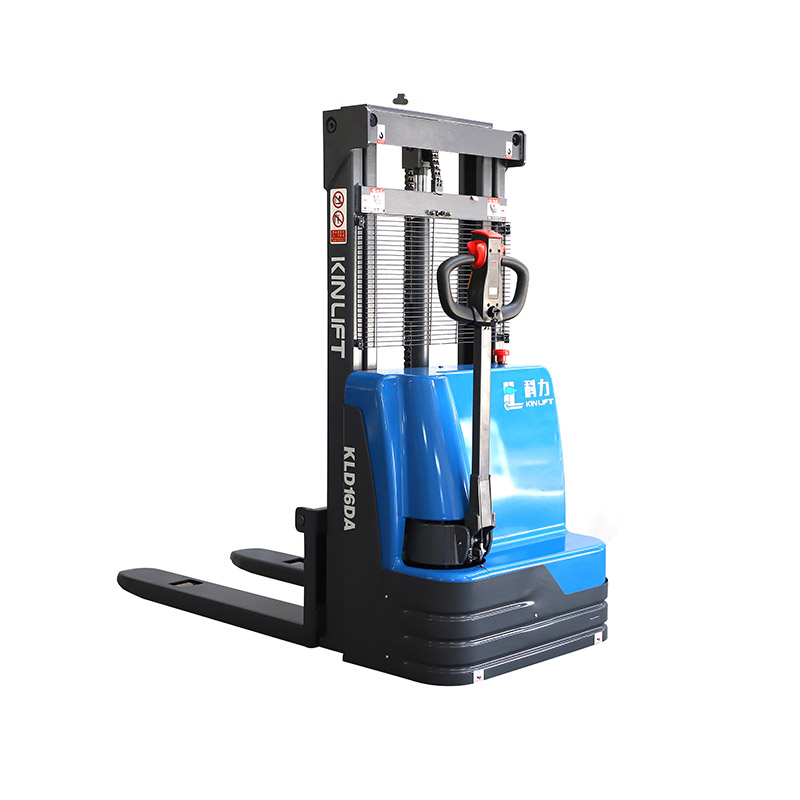
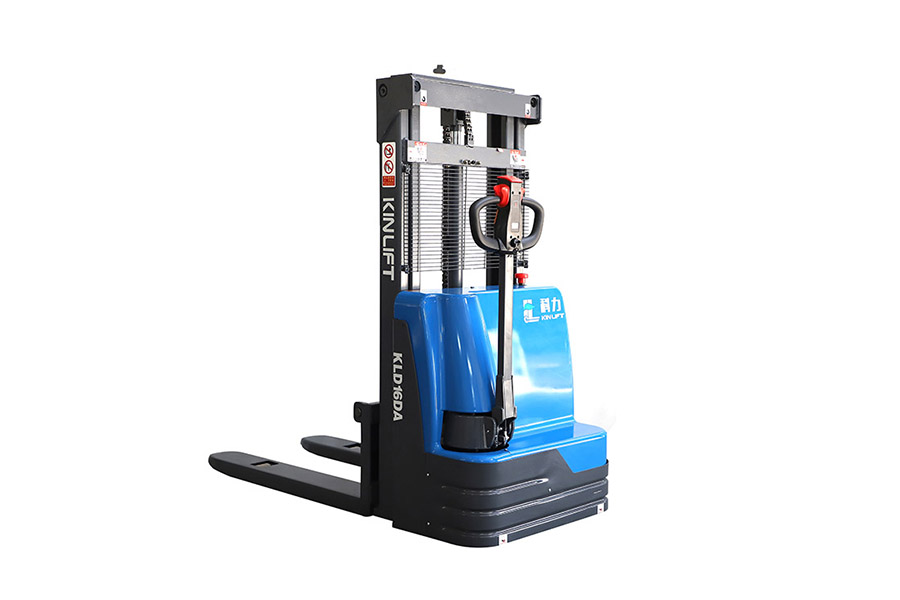
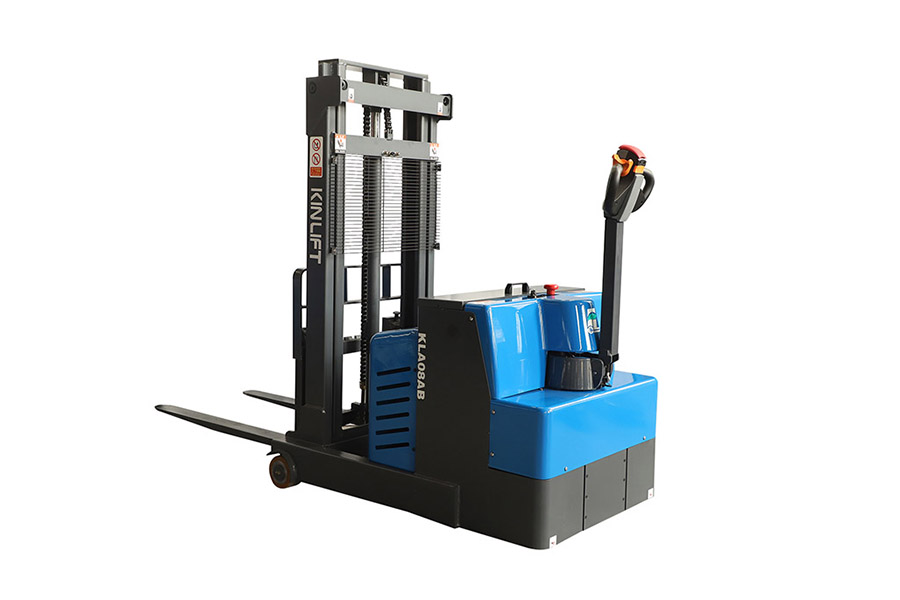
A walk-behind model is usually the first machine a site considers for short-distance pallet moves, put-away, and picking support. The operator walks alongside the machine, steering with a tiller handle and controlling travel and lift from the same position. Because the operator stays on foot, a walk-behind electric stacker suits narrow spaces, frequent starts and stops, and tasks made up of several short moves rather than long runs.
The Typical Handling Cycle
Most daily work follows a repeatable pattern. Understanding it helps buyers estimate battery use, travel distance, and operator fatigue.
- Approach the pallet with forks lowered and aligned to the entry openings.
- Insert the forks until the load is fully supported, checking that the pallet sits square.
- Lift the load to the required height in a smooth, controlled motion.
- Travel to the destination at a speed suited to the aisle and floor condition.
- Lower the load gently and withdraw the forks before stepping away.
Each stage carries a time cost. Short cycles in dense storage areas make acceleration, braking response, and steering effort more important than top speed. Long runs across open floors reverse that priority, which is why the duty profile should be written down before any models are compared.
Lift Height and Capacity: Matching Specs to Racking
Lift height and rated capacity are the two figures most often quoted, and both are easy to misread. Lift height must clear the highest pallet position you intend to reach, including the load itself and any clearance needed to place it safely. Capacity should be compared at the stated load center, because a load positioned farther forward reduces the safe rating of any machine.
| Application | Typical lift range | Planning note |
|---|---|---|
| Ground stacking and floor transfers | 1.6 m | Lowest cost for simple tasks |
| Low racking or mezzanine loading | 2.0 to 2.5 m | Check overhead clearance |
| Higher racking in compact sites | 2.5 to 3.0 m | Verify aisle width and floor flatness |
When comparing the top lift figure with your highest storage level, allow for pallet height and a safety margin. A unit that reaches the rack exactly at its maximum height leaves no room for uneven loads or slight floor variation. Many sites find that a modest additional allowance costs far less than repeated near misses during put-away.
Reading the Capacity Rating
Capacity is rated for a specific load center distance. If your typical loads are heavier than the nominal load, or positioned farther forward on the forks, the usable capacity falls. Ask suppliers to state the rating at the load center you will actually use, and confirm whether the figure applies at maximum lift height or at a lower position. A load chart provided in writing is far more useful than a single headline number.
Watch the fine print. A high nominal capacity does not guarantee the same safe lift at every height. Request the full load chart before making a shortlist.
Single-Faced Pallets: Why the Constraint Matters
Many sites that use single-faced pallets do so for cost and weight reasons inside closed loops, light distribution, and some manufacturing supply chains. Those advantages are real, but they place specific demands on handling equipment. Forks must enter from the open side, and the load must remain stable without support from a lower deck.
Dimensions That Affect Fork Selection
- Deck length and width, which determine how far the forks must penetrate.
- Entry opening height, which limits fork thickness and lifting clearance.
- Stringer or block layout, which controls where the forks contact the pallet.
- Board condition, since damaged decks can shift under load.
Measure several pallets from the same supplier rather than relying on a single sample. Tolerance differences between batches are common, and a fork setting that works on the best pallets may struggle with worn ones. Include a damage allowance in your specification and set a routine inspection for incoming stock.
Why Pallet Condition Changes Handling
A pallet with loose boards or cracked blocks behaves differently from a new one. The load may tilt slightly as the forks rise, or the deck may flex when the machine starts to travel. Operators working with mixed pallet quality often report more hesitation and more repositioning, which slows the whole cycle. Setting clear rejection criteria for damaged pallets protects both people and product.
Battery Options and Charging Strategy
Battery selection shapes purchase price, shift coverage, maintenance workload, and performance in cold conditions. Two chemistries dominate most walk-behind applications, and their differences are as much operational as they are technical. Every buyer of an electric pallet stacker should understand how each option fits the daily routine.
| Factor | Lead-acid | Lithium-ion |
|---|---|---|
| Initial cost | Generally lower | Generally higher |
| Opportunity charging | Limited | Well suited |
| Routine maintenance | Regular checks and watering | Minimal |
| Low temperature output | Reduced | Often better retained |
Lead-acid batteries suit operations with a single long shift and predictable downtime for charging. Lithium-ion packs suit multi-shift sites or operations that can charge during short breaks without harming battery life. The right answer depends on how many hours the machine works, how often it can charge, and whether a ventilated charging area is available.
Matching Battery Capacity to Shift Pattern
Calculate working hours from actual activity logs whenever possible. Estimate the number of lifts, the average travel distance per cycle, and the idle time between tasks. Then add a margin for peak periods. A battery that finishes a shift with almost no reserve may look adequate on paper and still cause delays during seasonal peaks.
Narrow Aisles and Cold Storage Environments
Two environments test equipment more than others: tight racking aisles and low temperature storage. Both demand careful specification, and both benefit from early discussion between the buyer and the manufacturer.
Narrow Aisle Operation
In narrow aisles, the controlling factors are turning radius, body width, and visibility. A compact chassis allows the operator to pivot within the available space, while a well-positioned handle keeps the operator's line of sight clear of the load. Floor flatness matters as much as machine dimensions, because uneven surfaces can destabilize a loaded mast and make precise positioning difficult.
Ask for the minimum aisle width in which the machine can turn with a typical pallet, then test that figure on site where possible. Include clearance for pedestrians and nearby equipment in the same assessment.
Low Temperature Conditions
Cold rooms affect batteries, seals, hydraulic components, and wheels. Battery output tends to drop as temperature falls, so lithium-ion packs or heated battery compartments are often specified for freezer work. Condensation is an equal concern when the machine moves between cold and warm zones, since moisture can reach electrical connectors and controls. Sealed connections, appropriate lubricants, and tyre compounds rated for low temperatures all reduce unplanned stoppages. Allowing the machine to acclimatize before heavy use after entering a cold zone also helps protect components and keeps performance consistent.
Safety Features Worth Verifying Before You Buy
Safety performance depends on design features and on how those features are maintained. Verify each item below through documentation and, where possible, a demonstration on the actual travel route of an electric pallet stacker.
- A braking system with multiple functions, including electromagnetic, regenerative, and counter-current braking, so the machine stops reliably under different loads and on slopes.
- A slope or ramp hold function that prevents rollback when the operator releases the handle on a grade.
- Automatic lift cut-off at the upper limit to protect the mast and prevent overtravel.
- Deadman-style controls that bring the machine to a safe state when the operator lets go.
- Speed reduction during turns and when the load is raised, which improves stability.
- Clearly labeled controls and an emergency stop within easy reach of the operator.
Safety features only protect people when they work correctly. Build a daily pre-use check into the operating routine, and record any fault promptly so it is resolved before the next shift.
Cost of Ownership Beyond the Purchase Price
The purchase price is only one component of total cost. Energy consumption, service visits, battery replacement, operator training, and unplanned downtime often add up to a comparable amount over the working life of the equipment. A simple five-year view helps buyers see where money actually goes when they own an electric pallet stacker.
Figures like these vary widely between sites, so treat the chart as a planning model rather than a benchmark. The useful habit is to estimate each category for your own duty cycle and compare the results across the options on your shortlist.
Maintenance Routines That Protect Uptime
- Daily inspection of forks, tiller, brakes, and wheels before the first shift.
- Weekly cleaning of contacts and connectors, especially in dusty or damp areas.
- Monthly checks on chain tension, mast movement, and lubrication points.
- Scheduled battery health checks and a written record of charging cycles.
A written maintenance schedule also supports warranty claims and insurance reviews. Keep service records with the equipment, and confirm that the supplier provides a wear parts list in advance so replacement items are not delayed by sourcing.
Common Buying Mistakes and How to Avoid Them
Most selection problems are preventable. The table below summarizes patterns that appear repeatedly in warehouse equipment projects.
| Mistake | Likely consequence | Prevention |
|---|---|---|
| Choosing lift height from memory | Machine cannot reach upper levels | Measure racking and pallet height |
| Ignoring pallet type | Unsafe engagement or wasted capacity | Verify deck and entry dimensions |
| Buying the cheapest battery | Short shifts and early replacement | Model energy use by duty cycle |
| Skipping operator input | Poor ergonomics and slow adoption | Include users in trial runs |
Operator input deserves particular attention. The people who use the machine every day can identify problems that specifications do not capture, such as awkward handle height or difficult access to the charging point. Their feedback during a trial often prevents costly changes after installation.
Preparing a Clear Specification for Quotations
A precise specification shortens the path from inquiry to a useful quotation. Suppliers can only price what they understand, so include the following information in every request for an electric pallet stacker:
- Pallet type, dimensions, and typical load weight, with the expected load center.
- Maximum lift height and the highest storage level to be reached.
- Aisle width, floor condition, and any ramps or thresholds on the route.
- Daily shift pattern, charging opportunities, and battery preference.
- Ambient temperature range, including any cold storage areas.
- Required documentation, such as user manuals and load charts.
Clear specifications also make comparison easier. When every supplier responds to the same information, differences in price, performance, and service become visible and easier to evaluate fairly.
Frequently Asked Questions
Q1: Can a walk-behind unit handle heavy daily volume?
Yes, provided the duty cycle matches its design. Units suited to frequent short moves can work through long shifts when batteries, charging, and maintenance are planned around the workload.
Q2: Is one lift height enough for an entire warehouse?
Often not. Sites with mixed racking heights may need more than one specification. Mapping the highest location for each activity usually reveals the true requirement for a single electric pallet stacker.
Q3: Which battery type is better for cold rooms?
Lithium-ion packs generally retain output better at low temperatures, but the right choice also depends on charging access, budget, and how often the machine moves between temperature zones.
Q4: How often should the machine be serviced?
Service intervals depend on use, environment, and the manufacturer's recommendations. Daily checks by operators combined with periodic professional inspections offer the best protection against unplanned failures.
Q5: Do operators need training before using a stacker?
Yes. Operators should understand controls, load limits, safe travel practices, and emergency procedures. Many workplaces also require documented training records as part of their safety program.
Q6: What should I ask a supplier before ordering?
Ask for the load chart, complete documentation, service support, wear part availability, and a clear statement of the conditions behind the rated capacity. Requesting a demonstration on a sample pallet can also reveal practical issues early.