

 English
 русский


Home / News / Industry News / What Should Buyers Know About Electric Reach Forklifts for Narrow Aisle Warehousing?
WAREHOUSE EQUIPMENT BUYING GUIDE
Understanding Electric Reach Forklifts for Modern Warehouse Operations
Warehouse operators increasingly need material handling equipment that can improve storage density, support vertical stacking, and maintain efficient pallet movement within limited floor space. Choosing the right electric reach forklifts requires more than comparing rated load capacities. Buyers must also consider lifting height, aisle dimensions, battery configuration, operating conditions, and the frequency of daily handling tasks.
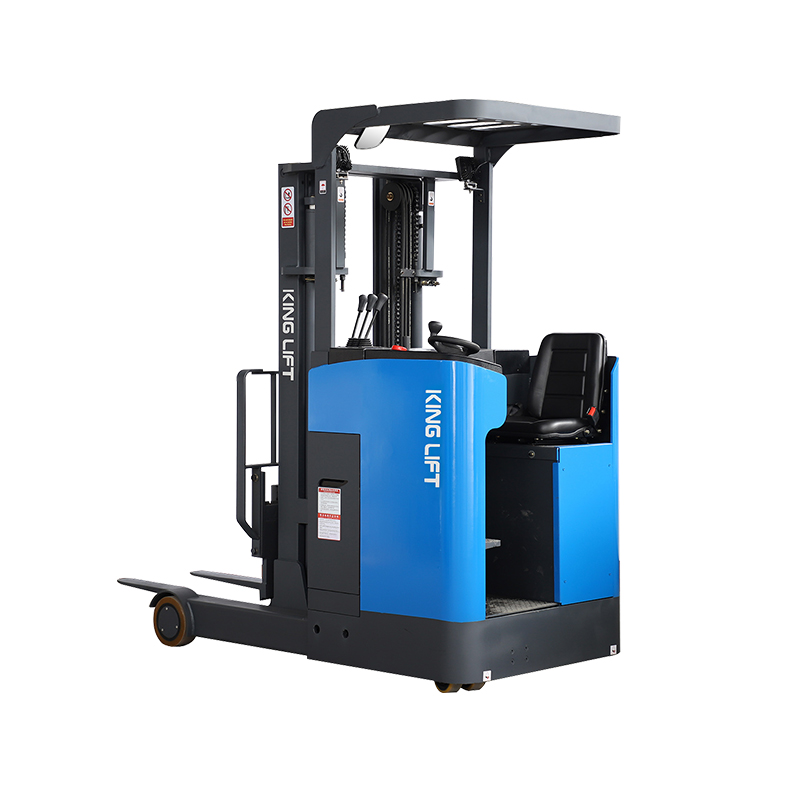
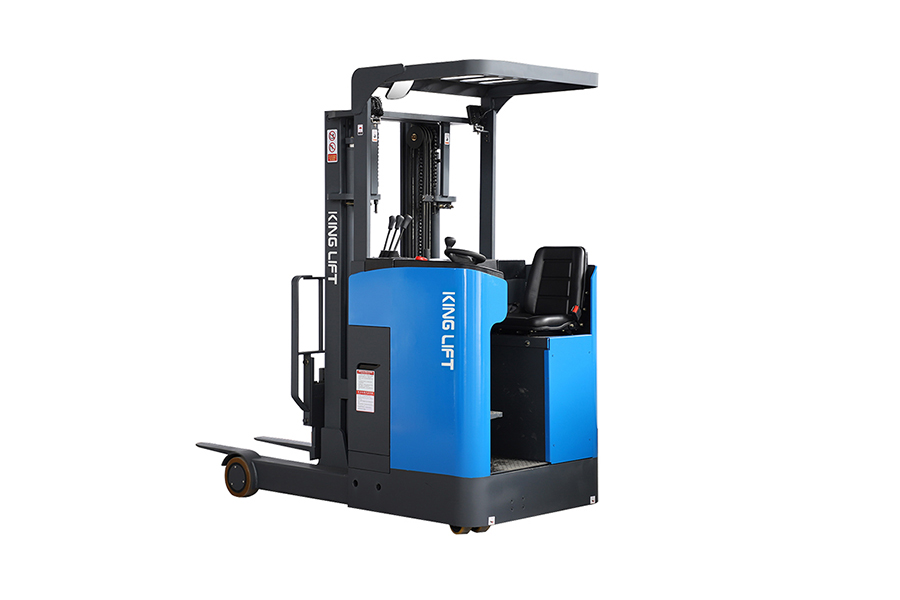
Sit-down electric reach forklifts are designed to combine forward-reaching operation with an operator seating position. This configuration allows warehouse personnel to handle palletized goods at different storage levels while working in facilities where conventional counterbalance trucks may require more maneuvering space. For operations handling loads between 1,000 kg and 2,000 kg, the KLR-A series provides several capacity configurations and lifting heights ranging from 1,600 mm to 6,000 mm.
This guide examines the working principles, technical characteristics, optional configurations, and purchasing considerations associated with this equipment category. It also explains how warehouse managers can evaluate a reach truck according to actual operating requirements rather than relying on individual specifications in isolation.
1-2T Rated Load Capacity
1.6-6M Available Lifting Height
5.2 Travel Speed km/h
What Are Electric Reach Forklifts and How Do They Work?
Electric reach forklifts are electrically powered material handling vehicles designed to lift, transport, and position palletized goods in warehouse environments. Their defining characteristic is a reach mechanism that allows the fork assembly and load to move forward from the truck body during handling operations. This arrangement supports pallet placement and retrieval at elevated storage positions while maintaining a relatively compact vehicle structure.
Unlike conventional counterbalance forklifts, which use a rear counterweight to balance the load carried at the front, reach trucks use a different structural arrangement. The load is handled through the forward-moving mast and fork assembly, with the vehicle structure and supporting components designed around this operating principle. This makes reach trucks particularly relevant to indoor facilities where aisle width and storage density influence equipment selection.
In a typical operation, the driver approaches a pallet position, aligns the forks with the pallet openings, and extends the reach mechanism to engage the load. The operator then retracts the load assembly before transporting the pallet to another location. For high-level storage, the mast raises the forks to the required rack position while the operator monitors load alignment and equipment stability.
Basic Operating Process of a Reach Forklift
Electric Reach Forklifts vs. Counterbalance Forklifts
Both equipment types handle palletized materials, but their structural designs and operating characteristics serve different warehouse requirements. A reach truck is generally selected when indoor storage density and elevated rack handling are priorities. A counterbalance forklift may be more appropriate when frequent outdoor travel, uneven surfaces, or a broader range of load-handling attachments are required.
| Evaluation Factor | Electric Reach Forklift | Counterbalance Forklift |
|---|---|---|
| Load Balancing | Reach truck structural configuration | Rear counterweight |
| Typical Environment | Indoor warehouse operations | Indoor and outdoor applications, depending on configuration |
| Aisle Requirements | Suitable for narrow-aisle layouts | Generally requires more maneuvering space |
| Storage Operations | High-level pallet racking | Ground-level and elevated material handling |
| Load Handling | Forward-reaching fork assembly | Front-mounted fork assembly |
| Floor Conditions | Best suited to smooth warehouse floors | Configuration-dependent, including rough-terrain options |
The comparison should not be interpreted as a universal ranking. A reach truck is not automatically suitable for every narrow warehouse, and a counterbalance forklift is not necessarily unsuitable for high storage. Actual performance depends on load dimensions, turning radius, mast configuration, rack geometry, floor conditions, and the manufacturer's rated capacity specifications.
Main Application Scenarios for Electric Reach Forklifts
Electric reach forklifts for narrow aisle warehouse operations are commonly considered in facilities that use vertical racking to increase storage capacity without expanding the building footprint. Their applications include:
- Distribution centers: Moving palletized inventory between receiving areas, storage racks, picking zones, and dispatch locations.
- Manufacturing warehouses: Supplying production materials and transferring finished products between storage areas and production lines.
- Food and beverage storage: Handling packaged goods in organized indoor storage facilities where cleanliness and space utilization are important.
- Pharmaceutical warehouses: Supporting structured pallet storage and inventory movement under controlled operating procedures.
- Electronics warehouses: Handling packaged components and finished equipment in facilities with defined aisle layouts and storage positions.
- Cold storage facilities: Supporting refrigerated inventory operations when the truck is equipped with an appropriate cold-storage package.
In facilities with high rack systems, the combination of a suitable mast height and controlled reach operation can help warehouse managers organize storage positions more efficiently. However, the aisle width must be calculated according to the actual truck configuration and pallet dimensions rather than using the rated lifting height as the only selection criterion.
KLR-A Series Sit-Down Electric Reach Forklifts: Product Configuration and Specifications
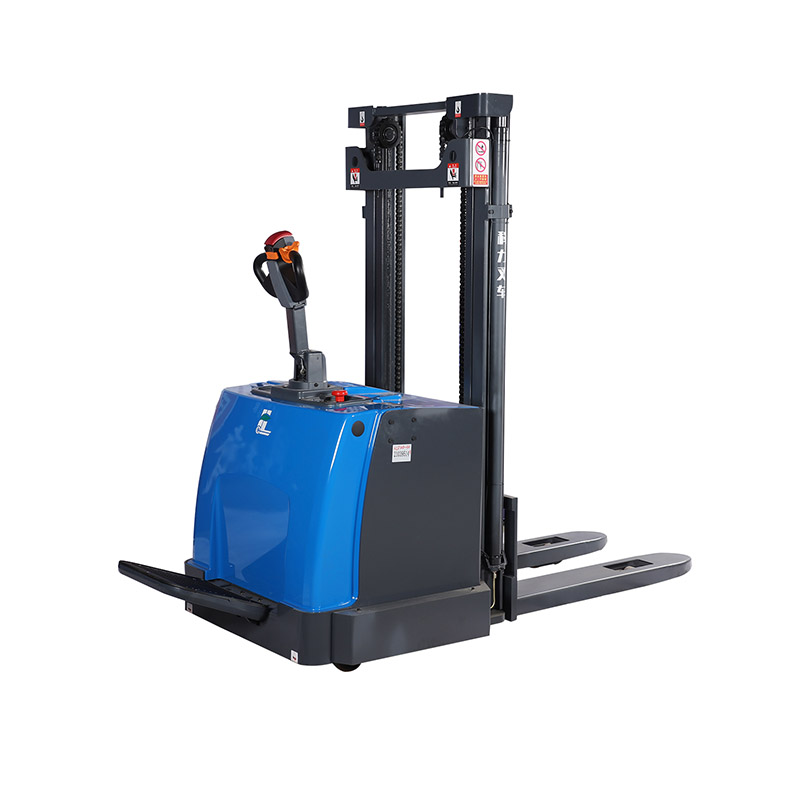
The KLR-A series is a sit-down electric reach forklift range designed for warehouse applications requiring a combination of load handling, elevated stacking, and operator comfort. It covers rated load capacities from 1,000 kg to 2,000 kg, with lifting height configurations from 1,600 mm to 6,000 mm.
These sit-down electric reach forklifts are designed without outriggers, allowing the equipment to handle both single-sided and double-sided pallets under compatible operating conditions. Standard fork tilt functionality supports pallet positioning and helps operators adjust the fork angle during loading and unloading. The seated operating position is intended for warehouse tasks involving repeated travel and pallet handling throughout a shift.
For buyers comparing 1-2 ton electric reach forklifts, selecting the correct rated capacity is only the first step. The maximum permissible load changes according to the lifting height, load center, mast configuration, and operating conditions. Therefore, the rated capacity shown in the model specification should always be checked against the actual load chart.
Key Model Parameters of KLR-A Electric Reach Forklifts
KLR10A 1,000 kg Rated Capacity
KLR15A 1,500 kg Rated Capacity
KLR20A 2,000 kg Rated Capacity
| Technical Parameter | KLR10A | KLR15A | KLR20A |
|---|---|---|---|
| Rated Load Capacity | 1,000 kg | 1,500 kg | 2,000 kg |
| Available Lifting Height Range | 1,600-6,000 mm | 1,600-6,000 mm | 1,600-6,000 mm |
| Travel Speed | 5.2 km/h | 5.2 km/h | 5.2 km/h |
| Operating Position | Sit-down | Sit-down | Sit-down |
| Fork Function | Standard Tilt | Standard Tilt | Standard Tilt |
| Pallet Compatibility | Single and Double-Sided | Single and Double-Sided | Single and Double-Sided |
The table presents the available series-level specifications. Individual mast combinations, overall vehicle width, battery voltage, and other dimensional or electrical parameters should be confirmed against the selected model's technical datasheet. These values should not be assumed to be identical across all configurations.
Understanding the 6m Lifting Height Requirement
Electric reach forklifts with a 6m lifting height can support warehouse operations that use multi-level pallet racking. However, a nominal maximum lifting height does not mean that every pallet can be placed at that level while retaining the full rated capacity.
Several factors should be checked before specifying a 6,000 mm mast configuration:
- Rack beam height: Confirm the elevation of the highest pallet storage position and allow sufficient clearance for safe placement and retrieval.
- Load weight: Check the capacity chart at the required lifting height rather than relying only on the basic rated load.
- Load center: Verify that the pallet dimensions and center of gravity are compatible with the truck's rated configuration.
- Building clearance: Consider overhead structures, lighting, fire protection equipment, and other obstructions.
- Floor conditions: Check floor flatness and load-bearing suitability, particularly in high-rack operating zones.
For example, a distribution facility using storage positions approximately six meters above floor level should evaluate the selected mast, maximum load at height, and overhead clearance together. A vehicle that meets the nominal lifting-height requirement may still require a different configuration if the pallets are unusually deep or heavy.
Core Features That Influence Electric Reach Forklift Performance
The practical value of an electric reach forklift depends on how its steering, drive system, control components, operator interface, and battery arrangement work together. For procurement teams, understanding these components provides a more useful basis for evaluating equipment than considering individual features separately.
01
EPS Electric Steering System
The electric power steering system reduces the physical effort required to steer the truck during repeated warehouse movements. Steering return functionality helps the steering system return toward its neutral position, supporting consistent vehicle control. Automatic speed reduction during turning helps manage vehicle movement when negotiating corners.
02
Vertical AC Brushless Drive Motor
The vertical AC brushless main drive motor is designed to support traction and controlled movement. Its operating characteristics include ramp-start capability and regenerative braking. Regenerative braking can return part of the braking energy to the electrical system, while controlled starting supports movement on suitable gradients.
03
Integrated Electrical Components
The electrical system incorporates a Zapi controller, Albright contactor, and AMP waterproof connectors. These components support motor control, electrical switching, and connection reliability. Component compatibility and correct installation are important for maintaining stable operation and facilitating maintenance.
04
Visibility and Driving Comfort
LED cold-light illumination supports visibility in warehouse environments with limited lighting. A wide-angle rearview mirror helps the operator monitor surrounding areas, while the shock-absorbing drive system is designed to improve driving comfort when moving across suitable warehouse floors.
05
Side-Opening Battery Compartment
The side-opening battery compartment provides access from the side of the vehicle, making battery removal and replacement more convenient when the appropriate handling equipment and procedures are available. This arrangement can be useful in operations that schedule battery changes between working shifts.
06
Adjustable Operator Seat
An adjustable seat allows the driver to establish a more suitable seating position for daily warehouse work. The sit-down configuration is relevant to facilities involving repeated travel between storage locations. Two travel activation switches, positioned at different operating levels, provide additional flexibility in vehicle operation.
07
CAN-BUS Control Architecture
The CAN-BUS system supports communication between electronic control components. According to the supplied KLR-A product specifications, the system contributes to a reported 24 percent increase in continuous working time. Actual working duration depends on battery capacity, workload, operating conditions, and driving habits. A higher-power lifting motor is also available as an option.
08
Practical Operating Accessories
A USB charging interface provides a convenient connection for compatible electronic devices. Standard fork tilt functionality assists with pallet positioning, while compatibility with single-sided and double-sided pallets supports different warehouse handling requirements.
Why Component Integration Matters
Warehouse equipment operates through the coordinated performance of mechanical and electrical systems. Steering controls, motor response, braking, lifting functions, and battery management must work together to provide predictable handling behavior.
For example, an operator working in a narrow aisle needs controlled steering response, good visibility, and stable travel behavior. When approaching an elevated pallet position, the lifting system and fork tilt function become more important. During extended shifts, battery capacity and electrical efficiency have a greater influence on equipment availability.
Therefore, procurement teams should evaluate the complete operating configuration rather than selecting a truck solely because it includes a particular controller, motor, or accessory.
Optional Equipment for Different Electric Reach Forklift Applications
Warehouse operating conditions vary considerably between facilities. A standard reach truck configuration may be appropriate for a conventional indoor warehouse, while specialized environments can require additional equipment. The KLR-A series provides several optional configurations that can be considered according to the intended application.
01
Cold-Storage Special Configuration
Electric reach forklifts for cold storage applications require suitable protection and component specifications for low-temperature operating conditions. A dedicated cold-storage version can be considered for refrigerated warehouses and other temperature-controlled facilities. Buyers should confirm the permitted temperature range, condensation protection, battery characteristics, and maintenance requirements before ordering.
02
Imported Battery and 300Ah High-Capacity Battery
Battery selection influences operating duration, charging arrangements, and equipment availability. Imported battery options and a 300Ah high-capacity battery can be considered according to the required working schedule. Procurement teams should verify battery voltage, physical dimensions, compatibility, and charging specifications for the selected vehicle.
03
Lithium-Ion Battery Configuration
Lithium ion electric reach forklifts may be suitable for operations that require flexible charging arrangements and frequent equipment use. Lithium-ion battery systems generally offer opportunities for shorter charging intervals and reduced routine battery maintenance compared with conventional lead-acid systems. However, charging equipment, battery management, temperature requirements, and compatibility must be evaluated as a complete system.
04
Fork Side-Shifter Attachment
A side-shifter attachment allows the forks to move laterally within their designed operating range. This function can help operators correct pallet alignment without repeatedly repositioning the entire vehicle. It is particularly relevant when working with rack positions that require precise fork placement.
05
Forward-Reverse Joystick Control
Joystick control provides an alternative interface for selecting forward and reverse travel. This option can be evaluated according to operator preferences, working habits, and the overall control layout. Buyers should confirm the available functions and control compatibility when specifying the vehicle.
How to Match Optional Equipment to Actual Workloads
Optional equipment should be selected according to a defined operational requirement. Adding accessories without considering their impact on capacity, dimensions, maintenance, and electrical demand may increase procurement costs without improving actual productivity.
| Operating Requirement | Configuration to Consider | Selection Focus |
|---|---|---|
| Low-Temperature Storage | Cold-storage version | Temperature compatibility and protection |
| Extended Daily Operation | High-capacity battery | Battery runtime and replacement schedule |
| Frequent Charging Opportunities | Lithium-ion battery | Charging system and battery compatibility |
| Precise Pallet Alignment | Fork side-shifter | Attachment capacity and operating clearance |
| Alternative Travel Control | Forward-reverse joystick | Operator preference and control layout |
How to Choose Electric Reach Forklifts for Your Warehouse
Selecting suitable electric reach forklifts involves matching the equipment's technical configuration with the warehouse's physical layout and daily handling requirements. A systematic evaluation helps purchasing managers avoid capacity mismatches, unsuitable mast configurations, and unnecessary optional equipment.
1. Determine the Required Load Capacity
Begin by identifying the actual weight of the pallets that the truck will handle. The KLR-A range includes 1,000 kg, 1,500 kg, and 2,000 kg rated capacity configurations. Buyers should consider the heaviest regular load rather than using the average pallet weight as the only reference.
In addition to pallet weight, check the load center and dimensions. A long or unusually shaped load can influence the permissible capacity and stability of the truck. The rated capacity must be verified at the intended lifting height using the applicable load chart.
2. Confirm the Required Lifting Height
Measure the height of the highest pallet storage position, including the clearance required for placing and retrieving goods. Available KLR-A lifting configurations range from 1,600 mm to 6,000 mm. The correct mast should accommodate the rack layout without creating unnecessary overhead clearance or handling difficulties.
It is also important to distinguish between maximum mast height, maximum fork lifting height, and overall vehicle height. These measurements serve different purposes and should be confirmed in the technical documentation.
3. Measure the Warehouse Aisle Width
Aisle width is one of the most important factors when selecting electric reach forklifts for narrow aisle warehouse operations. Buyers should measure the actual clear aisle distance and account for the space required to approach, turn, extend the forks, and position the pallet.
Consider the following measurements:
- Clear distance between adjacent storage racks.
- Pallet length and width, including any overhanging goods.
- Truck overall width and turning characteristics.
- Right-angle stacking aisle requirements.
- Clearance around rack uprights, walls, and other equipment.
Do not select a truck based only on its overall width. The required working aisle depends on the truck's turning geometry, pallet dimensions, fork configuration, and the manufacturer's published stacking specifications.
4. Evaluate the Working Environment
Standard indoor warehouses and refrigerated storage facilities have different operating requirements. Normal-temperature environments generally focus on floor conditions, lighting, ventilation, and daily operating intensity. Cold storage requires additional consideration of low-temperature compatibility, electrical components, battery performance, and condensation management.
For buyers considering electric reach forklifts cold storage options, the actual operating temperature and the duration of exposure should be provided to the manufacturer. A cold-storage package should be specified according to the intended temperature range rather than selected solely because the truck is electrically powered.
5. Compare Lead-Acid and Lithium-Ion Battery Requirements
Battery technology affects equipment operation, maintenance, charging arrangements, and replacement planning. Lead-acid batteries may be appropriate for operations with established charging and battery replacement areas. Lithium-ion configurations can offer greater flexibility for operations that need frequent opportunity charging and reduced routine battery maintenance.
| Battery Consideration | Lead-Acid | Lithium-Ion |
|---|---|---|
| Charging Pattern | Usually scheduled charging | Can support opportunity charging when approved |
| Routine Maintenance | Requires battery-specific maintenance | Generally requires less routine battery maintenance |
| Charging Equipment | Compatible lead-acid charger | Compatible lithium battery charger and management system |
| Procurement Focus | Battery replacement and charging area | Initial investment and system compatibility |
| Temperature Requirements | Check approved operating conditions | Check battery-specific temperature limits |
The appropriate battery should be selected according to the total cost of ownership, charging infrastructure, expected working hours, and replacement requirements. Battery capacity alone does not determine actual operating time because lifting frequency, travel distance, load weight, and ambient temperature also affect energy consumption.
6. Calculate Continuous Working Time and Battery Replacement Needs
For multi-shift warehouses, battery availability can directly influence equipment utilization. Buyers should estimate the number of working hours per shift, average travel distance, lifting frequency, and available charging periods. These details help determine whether one battery is sufficient or whether a replacement arrangement is necessary.
Battery replacement for electric reach forklifts should also be planned around the truck's battery compartment design. The KLR-A side-opening battery compartment provides convenient side access for replacement. However, battery handling still requires suitable lifting equipment, a designated replacement area, and compliance with the manufacturer's safety instructions.
7. Evaluate Operator Controls and Maintenance Accessibility
Operator comfort and service accessibility influence daily operating efficiency. Adjustable seating, steering response, visibility, control layout, and access to electrical components should be included in equipment evaluation. Maintenance teams should also review the availability of technical documentation, replacement components, and recommended inspection procedures.
Warehouse Procurement Checklist
- Confirm maximum pallet weight and load center.
- Measure the highest storage position.
- Record clear aisle width and pallet dimensions.
- Identify normal-temperature or cold-storage conditions.
- Determine daily working hours and shift arrangements.
- Choose a suitable battery technology and capacity.
- Check attachment requirements and pallet compatibility.
- Request the load chart and complete technical datasheet.
Battery Replacement and Maintenance for Electric Reach Forklifts
Battery management is an important part of maintaining electric reach forklift availability. Poor charging practices, unsuitable replacement batteries, and insufficient inspection can affect operating duration and electrical system reliability. A structured battery maintenance plan should be established before equipment enters regular warehouse service.
Understanding Battery Replacement Requirements
Battery replacement should begin with confirmation of the original battery specifications. Important parameters include voltage, rated capacity, dimensions, terminal arrangement, connector type, and battery weight. These specifications must be compatible with the truck's electrical and mechanical design.
For a KLR-A vehicle with a side-opening battery compartment, the replacement procedure should follow the manufacturer's instructions. The replacement area must provide sufficient clearance, and the handling equipment must be suitable for the battery's weight and dimensions. Personnel should be trained to disconnect, lift, position, and reconnect the battery safely.
Routine Battery Inspection
- Check the battery housing for visible damage, leakage, or abnormal deformation.
- Inspect connectors and cables for looseness, wear, and signs of overheating.
- Follow the charging procedure specified for the battery technology.
- Keep the battery compartment clean and free from foreign materials.
- Review charging records and investigate unusual changes in operating duration.
- Arrange professional inspection when battery performance changes unexpectedly.
General Reach Forklift Maintenance Schedule
| Inspection Frequency | Recommended Inspection Items | Maintenance Purpose |
|---|---|---|
| Before Each Shift | Steering, brakes, tires, forks, controls, lights, battery condition | Identify visible problems before operation |
| Daily | Electrical connections, hydraulic system, mast and fork condition | Monitor normal equipment condition |
| Periodic | Drive motor, controller, contactor, mast rollers and hydraulic components | Identify developing wear or faults |
| Scheduled Service | Professional inspection, lubrication, adjustments and system testing | Maintain equipment according to service requirements |
The actual maintenance intervals should follow the equipment manual, operating intensity, and workplace conditions. High-utilization warehouses may require more frequent inspection of certain components. Any abnormal noise, steering response, braking behavior, or lifting performance should be investigated before the truck returns to service.
Why Manufacturing Quality and Technical Support Matter When Purchasing Reach Forklifts
When sourcing electric reach forklifts from a manufacturer in China, procurement teams should evaluate more than the quoted purchase price. Manufacturing processes, component sourcing, quality management, documentation, and customization support all influence the long-term suitability of warehouse equipment.
Quality Management and Manufacturing Capabilities
A structured quality management system helps establish consistent procedures for component inspection, assembly, testing, and finished equipment verification. Buyers can request information about the manufacturer's production processes, inspection records, and applicable quality certifications.
For the KLR-A series, the available manufacturing credentials include ISO 9001 quality management certification and a Special Equipment Manufacturing License. The product documentation also identifies multiple utility model patents. Buyers should request current certificate copies and verify their applicable scope before making procurement decisions.
Component Selection and Electrical System Reliability
Electrical and control components influence the performance of the vehicle's drive and lifting systems. The specified use of a Zapi controller, Albright contactor, and AMP waterproof connectors provides identifiable component references for technical evaluation.
During supplier assessment, buyers should clarify component specifications, electrical protection, service availability, and the recommended procedures for troubleshooting. It is also useful to establish whether replacement components can be supplied independently and whether technical support is available for electrical system diagnosis.
OEM and Configuration Customization
Warehouse requirements are rarely identical across different facilities. Some buyers need a particular lifting height, while others require a specialized battery arrangement or additional fork functions. OEM and customization discussions should therefore focus on the technical requirements that affect actual operation.
For sit-down electric reach forklifts, customization discussions may cover:
- Rated capacity and lifting height configuration.
- Cold-storage equipment requirements.
- Battery technology and capacity selection.
- Side-shifter attachment compatibility.
- Forward-reverse joystick control configuration.
- Technical documentation and identification requirements.
Technical Documentation and After-Sales Support
Complete documentation helps warehouse operators understand the truck's functions, limitations, and maintenance requirements. Before shipment, buyers should confirm the availability of the user manual, technical parameter sheet, load chart, battery information, and relevant maintenance instructions.
After-sales support should also be discussed during procurement. Important points include troubleshooting guidance, spare parts availability, warranty conditions, service communication procedures, and the technical information required when reporting equipment faults.
A clear understanding of these arrangements helps purchasing teams assess the practical support available throughout the equipment's service life. It also reduces uncertainty when introducing new equipment into an established warehouse operation.
Practical Warehouse Evaluation: Matching Reach Forklift Specifications to Operating Conditions
A useful way to evaluate a reach forklift is to consider a typical warehouse procurement scenario. The following example is an illustrative technical assessment rather than a report of a specific customer installation.
ILLUSTRATIVE PROCUREMENT SCENARIO
A Distribution Warehouse With Multi-Level Pallet Racking
Assume a distribution facility handles packaged goods on pallets with a maximum regular load weight of approximately 1,400 kg. Its storage racks have upper pallet positions close to six meters, and the warehouse operates several handling shifts each day.
Maximum Regular Load 1,400 kg
Required Storage Height 6,000 mm
Working Environment Indoor Warehouse
Operating Pattern Multiple Shifts
Under these conditions, a 1,500 kg rated capacity model may initially appear suitable. However, the procurement team must verify whether the selected configuration retains sufficient capacity at the required lifting height and load center. If the actual load chart does not support the required pallet weight at that height, a different capacity configuration may be necessary.
The warehouse must also measure the working aisle width, confirm pallet compatibility, and review the mast's overall dimensions. If the equipment operates for extended periods, battery capacity and the possibility of scheduled replacement or charging should be considered. The side-opening battery compartment may simplify replacement planning, provided the facility has suitable handling equipment and sufficient clearance.
This assessment illustrates why load capacity, lifting height, aisle dimensions, and battery arrangements should be evaluated together. A suitable forklift configuration is determined by the complete warehouse operating profile, not by a single headline specification.
Key Lessons for Purchasing Teams
- Do not assume the nominal rated capacity remains available at maximum lifting height.
- Confirm the actual working aisle requirement using pallet and truck dimensions.
- Consider battery management as part of the overall shift schedule.
- Request technical documentation for the exact configuration being quoted.
- Evaluate optional attachments according to their effect on capacity and operating clearance.
Frequently Asked Questions About Electric Reach Forklifts
Q1: What is the difference between sit-down and stand-up electric reach forklifts?
Sit-down electric reach forklifts provide an operator seat and are suitable for warehouse operations involving repeated travel and pallet handling. Stand-up reach forklifts are designed for operators who work in a standing position and may be preferred in applications involving frequent entry and exit from the vehicle. The appropriate type depends on travel distance, task frequency, operator preference, and warehouse layout.
Q2: Can electric reach forklifts work in cold storage warehouses?
Yes, electric reach forklifts can be configured for suitable refrigerated warehouse applications. However, standard equipment should not automatically be assumed to be suitable for low-temperature environments. Buyers should specify the operating temperature, exposure duration, battery requirements, and condensation conditions when requesting a cold-storage configuration.
Q3: Is a lithium-ion battery available for KLR-A electric reach forklifts?
Yes. Lithium-ion battery configuration is available as an optional choice for the KLR-A series. Buyers should confirm the battery capacity, voltage, charger compatibility, battery management system, and permitted operating temperature before ordering. The selection should reflect the warehouse's daily working schedule and charging infrastructure.
Q4: Can the battery be replaced from the side on KLR-A electric reach forklifts?
Yes. The KLR-A series features a side-opening battery compartment that supports side access for battery replacement. This arrangement can assist warehouses that need to organize battery changes between shifts. Replacement must follow the manufacturer's instructions and use suitable battery handling equipment.
Q5: What pallet types are compatible with KLR-A series electric reach forklifts?
The KLR-A series is designed to handle both single-sided and double-sided pallets. Buyers should still confirm pallet dimensions, fork spacing, entry direction, load center, and load weight to ensure compatibility with the selected truck configuration.
Q6: What lifting height is available for KLR-A electric reach forklifts?
The available lifting height range is from 1,600 mm to 6,000 mm. The actual mast configuration should be selected according to the highest rack position, overhead clearance, pallet dimensions, and required load capacity at height.
Q7: How do I determine the correct capacity for a 1-2 ton electric reach forklift?
Start with the maximum pallet weight, then check the load center and required lifting height. The 1,000 kg, 1,500 kg, and 2,000 kg configurations provide different rated capacities, but the permissible load may decrease according to the mast and load conditions. Always verify the manufacturer's capacity chart for the exact configuration.
Q8: What information should I provide when requesting a quotation for electric reach forklifts?
Provide the required rated capacity, maximum lifting height, warehouse aisle width, pallet dimensions, working environment, daily operating hours, and preferred battery type. Information about optional attachments and the expected delivery destination will also help the manufacturer prepare a more accurate quotation.
EQUIPMENT SELECTION AND PROCUREMENT
Find the Right Electric Reach Forklift Configuration for Your Warehouse
Choosing suitable electric reach forklifts requires a clear understanding of your warehouse layout, load characteristics, lifting requirements, and daily operating schedule. A properly specified vehicle can support organized pallet handling while making better use of available storage space.
The KLR-A series offers sit-down configurations with rated capacities of 1,000 kg, 1,500 kg, and 2,000 kg, as well as lifting height options ranging from 1,600 mm to 6,000 mm. Optional configurations include cold-storage equipment, lithium-ion batteries, high-capacity batteries, side-shifter attachments, and forward-reverse joystick control.
Information to Prepare Before Requesting a Quotation
- Required load capacity and maximum pallet weight.
- Required lifting height and rack dimensions.
- Warehouse aisle width and pallet specifications.
- Normal-temperature or cold-storage operating conditions.
- Battery preference and expected working hours.
- Required attachments and other customization details.
Contact the equipment supplier with these details to discuss the appropriate configuration, technical specifications, and available options. You can also request the KLR-A user manual and parameter sheet to review equipment dimensions, operating requirements, and configuration details before making a purchasing decision.
Explore the KLR-A sit-down electric reach forklift specifications to review the product configuration and prepare your warehouse equipment inquiry.
Prepare your warehouse requirements and request a configuration-based quotation.