

 English
 русский

Home / News / Industry News / What Key Features Make Electric Reach Forklifts Different from Counterbalance Forklifts?
As warehouse operations continue to evolve toward higher density storage, greater efficiency, and lower environmental impact, material handling equipment has undergone significant specialization. Among the discussed categories today are electric reach forklifts and counterbalance forklifts. While both serve essential roles in lifting and transporting loads, their design philosophies, performance characteristics, and ideal use cases differ substantially.
The Evolving Role of Forklifts in Modern Warehousing
Warehousing has shifted from simple ground-level storage to vertically optimized systems that maximize cubic space. Narrow aisles, high racking systems, and just-in-time inventory strategies have become standard across distribution centers, cold storage facilities, and manufacturing warehouses.
In this context, traditional forklift designs are no longer universally suitable. Equipment must now be tailored to specific spatial and operational demands. Electric reach forklifts emerged as a direct response to these requirements, offering a fundamentally different approach compared to counterbalance forklifts.
Basic Design Philosophy: Reach vs. Counterbalance
The fundamental difference lies in how each forklift type achieves stability while lifting loads.
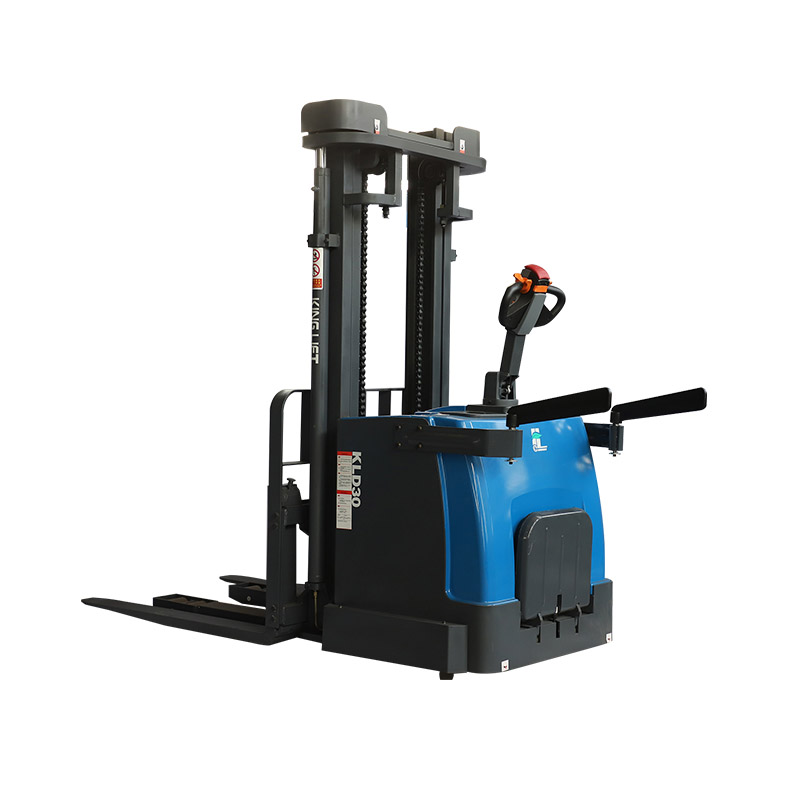
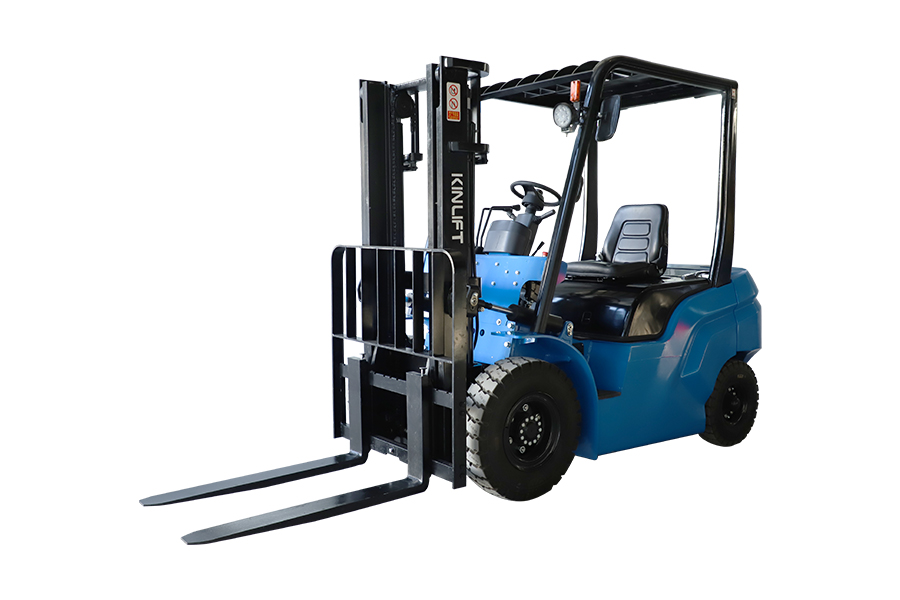
Counterbalance forklifts rely on a heavy rear counterweight to offset the load being lifted at the front. This design is simple and robust, making it ideal for general-purpose material handling, especially in open or outdoor environments.
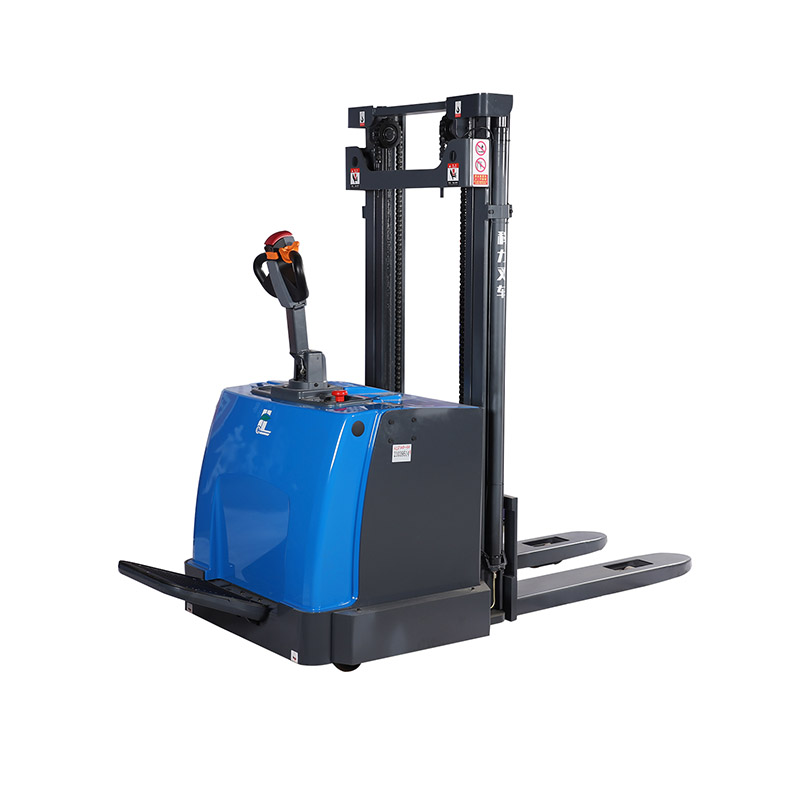
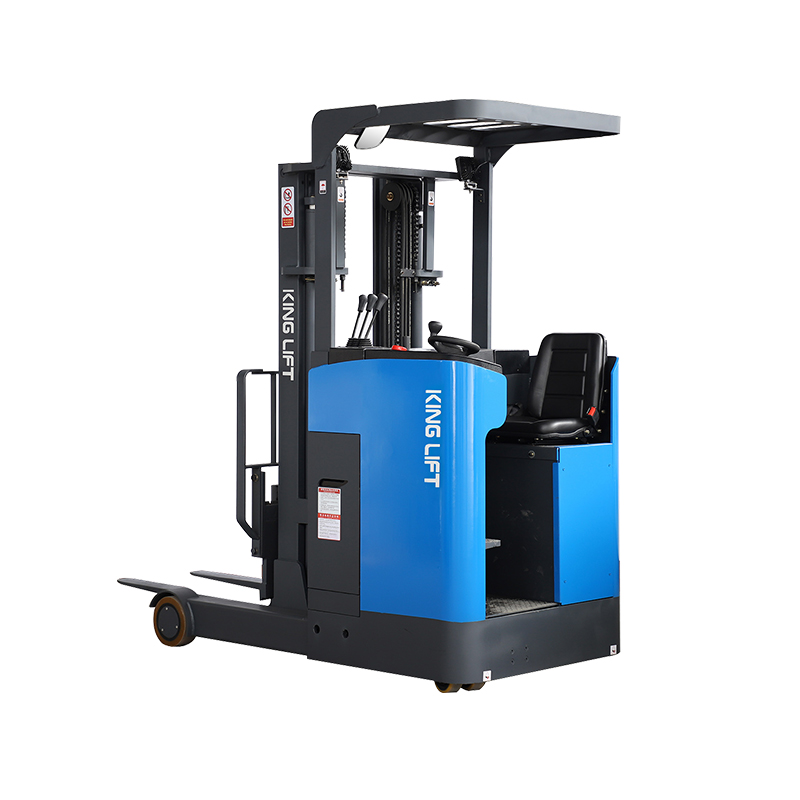
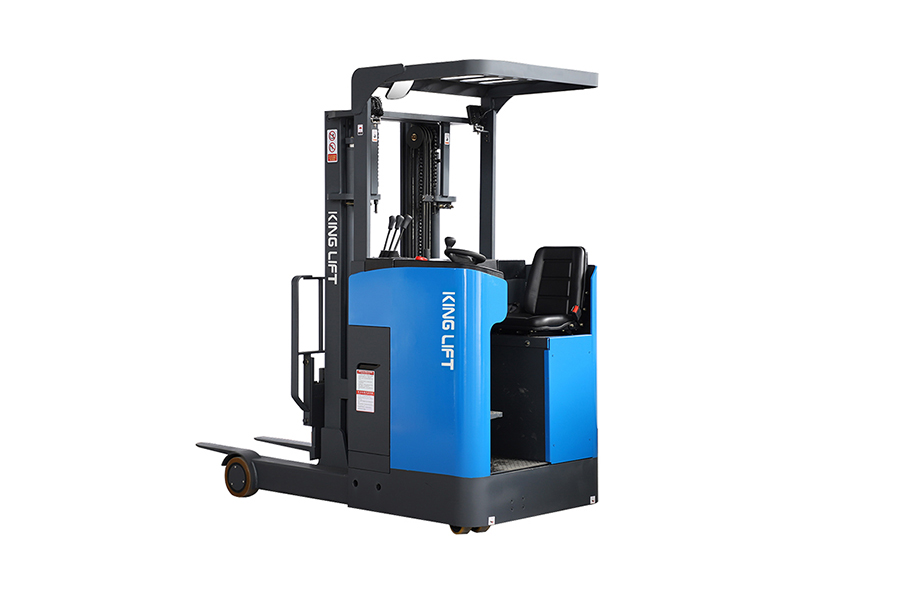
Electric reach forklifts, by contrast, eliminate the need for a large rear counterweight. Instead, they use extendable reach mechanisms, stabilizing legs, and optimized chassis geometry to support loads. This design allows the operator to reach forward into racking systems while maintaining a compact overall footprint.
Structural Differences That Define Performance
Mast and Reach Mechanism
One of the defining features of electric reach forklifts is the reach mast system. Unlike counterbalance forklifts, where the mast remains fixed relative to the chassis, reach forklifts use a pantograph or telescopic mechanism that allows the forks to extend and retract horizontally.
This reach capability enables:
- Deep pallet placement within racks
- Operation in narrow aisles
- Improved load positioning accuracy at height
Counterbalance forklifts lack this reach function, requiring more aisle space to maneuver and place loads.
Chassis Width and Turning Radius
Electric reach forklifts are engineered with narrow chassis designs to operate efficiently in confined spaces. Their compact width and tight turning radius make them suitable for very narrow aisle layouts.
Counterbalance forklifts generally require wider aisles due to their longer body length and larger turning arc. While this is not a disadvantage in open environments, it limits their effectiveness in high-density storage facilities.
Load Handling at Height
When lifting loads to significant heights, stability becomes a critical concern. Electric reach forklifts are specifically designed for high stacking, often operating at heights far beyond what standard counterbalance forklifts can safely achieve indoors.
Key features supporting high-level operation include:
- Low center of gravity designs
- Stabilizing support legs
- Advanced mast damping systems
These characteristics allow electric reach forklifts to maintain load stability even at extended heights, which is essential in modern vertical warehousing.
Power Systems and Energy Efficiency
Electric Power as a Core Advantage
Electric reach forklifts are exclusively electric-powered, aligning with the growing demand for clean, low-emission warehouse operations. Their electric drive systems offer quiet operation, zero exhaust emissions, and consistent performance in enclosed spaces.
While counterbalance forklifts are also available in electric versions, they are more commonly associated with internal combustion engines in many industries. This distinction gives electric reach forklifts a clear advantage in facilities prioritizing sustainability and indoor air quality.
Battery Management and Operational Cycles
Electric reach forklifts are optimized for long indoor shifts, with battery systems designed for:
- Efficient energy consumption
- Regenerative braking
- Predictable performance throughout the discharge cycle
These features support high uptime and reduced energy costs, which is a key consideration for electric reach forklifts manufacturers and end users alike.
Operator Positioning and Ergonomics
Operator Compartment Design
Another key difference lies in operator positioning. Electric reach forklifts typically feature a sideways or semi-standing operator position. This orientation provides better visibility down narrow aisles and reduces neck and torso strain during frequent directional changes.
Counterbalance forklifts usually place the operator facing forward, which is more suitable for open areas but less ergonomic in tight aisle environments where constant reversing is required.
Visibility and Precision Control
Precision is essential when placing pallets at height. Electric reach forklifts are designed to maximize operator visibility of forks, loads, and rack beams. Enhanced sightlines contribute to:
- Reduced product damage
- Faster pallet placement
- Improved safety in dense storage zones
These design priorities reflect the specialized nature of reach truck operations.
Space Utilization and Warehouse Layout Impact
Narrow Aisle Compatibility
One of the significant advantages of electric reach forklifts is their ability to operate in narrow aisles. This capability allows warehouses to:
- Increase storage density
- Add more racking rows within the same footprint
- Optimize vertical space usage
Counterbalance forklifts require wider aisles, which reduces the total available storage area. In high-cost real estate markets, this difference can have substantial financial implications.
Vertical Storage Optimization
Electric reach forklifts support higher lift heights, making them ideal for warehouses that prioritize vertical expansion over horizontal growth. This aligns with modern warehouse design strategies focused on cubic volume rather than floor area alone.
Safety Characteristics and Control Systems
Stability at Height
Operating at height introduces unique safety challenges. Electric reach forklifts are engineered with systems that actively manage stability, such as:
- Load weight sensing
- Speed reduction at elevation
- Controlled mast movement
These features reduce the risk of tipping and load instability, particularly in high-reach applications.
Reduced Pedestrian Risk
Because electric reach forklifts operate primarily in designated narrow aisles, pedestrian interaction is often minimized. This separation of traffic flows enhances overall warehouse safety compared to environments where counterbalance forklifts and pedestrians frequently share space.
Application-Specific Suitability
Where Electric Reach Forklifts Excel
Electric reach forklifts are particularly well-suited for:
- High-density racking systems
- Indoor distribution centers
- Cold storage facilities
- E-commerce fulfillment warehouses
Their design directly supports environments where space efficiency and vertical reach are critical.
Where Counterbalance Forklifts Remain Relevant
Despite their limitations in narrow aisles, counterbalance forklifts remain valuable in:
- Loading and unloading trucks
- Outdoor yards
- Mixed-use facilities with varied load types
This highlights that the two forklift types are not competitors in every context but rather complementary solutions.
Electric Reach Forklifts vs. Counterbalance Forklifts
| Feature | Electric Reach Forklifts | Counterbalance Forklifts |
|---|---|---|
| Primary Operating Environment | Indoor, narrow aisles | Indoor and outdoor |
| Aisle Width Requirement | Narrow | Wide |
| Lift Height Capability | High | Moderate |
| Reach Function | Yes | No |
| Stability Method | Support legs and reach mechanism | Rear counterweight |
| Energy Source | Electric only | Electric or combustion |
| Storage Density Impact | High optimization | Limited optimization |
| Operator Position | Sideways or standing | Forward-facing |
The Role of Electric Reach Forklifts Manufacturers in Industry Development
As warehouse demands grow more complex, electric reach forklifts manufacturers continue to refine designs that improve efficiency, safety, and operator comfort. Advances in control systems, energy management, and structural engineering reflect the increasing specialization of material handling equipment.
Rather than offering one-size-fits-all solutions, manufacturers focus on application-driven innovation, ensuring electric reach forklifts meet the precise needs of modern logistics environments.
Conclusion: Choosing the Right Tool for the Right Environment
The key features that differentiate electric reach forklifts from counterbalance forklifts stem from their fundamentally different design objectives. Electric reach forklifts are purpose-built for narrow aisles, high stacking, and indoor efficiency, while counterbalance forklifts offer versatility and simplicity for general material handling.
Selecting between the two requires a clear understanding of warehouse layout, storage density goals, and operational priorities. When applied correctly, each forklift type delivers performance within its intended environment.
FAQ
Q1: Are electric reach forklifts suitable for outdoor use?
Electric reach forklifts are primarily designed for indoor environments and smooth surfaces. Outdoor use is generally limited and depends on surface conditions.
Q2: Do electric reach forklifts replace counterbalance forklifts completely?
No. Each serves different operational needs. Many facilities use both types to handle distinct tasks efficiently.
Q3: Why are electric reach forklifts commonly used in narrow aisles?
Their compact chassis, reach mechanism, and tight turning radius allow safe and efficient operation in confined spaces.
Q4: Are electric reach forklifts energy-efficient?
Yes. Their electric power systems are optimized for indoor use, offering high energy efficiency and low operating costs.
Q5: What industries benefit from electric reach forklifts?
Industries with high-density indoor storage, such as logistics, e-commerce, and cold storage, benefit from their design.